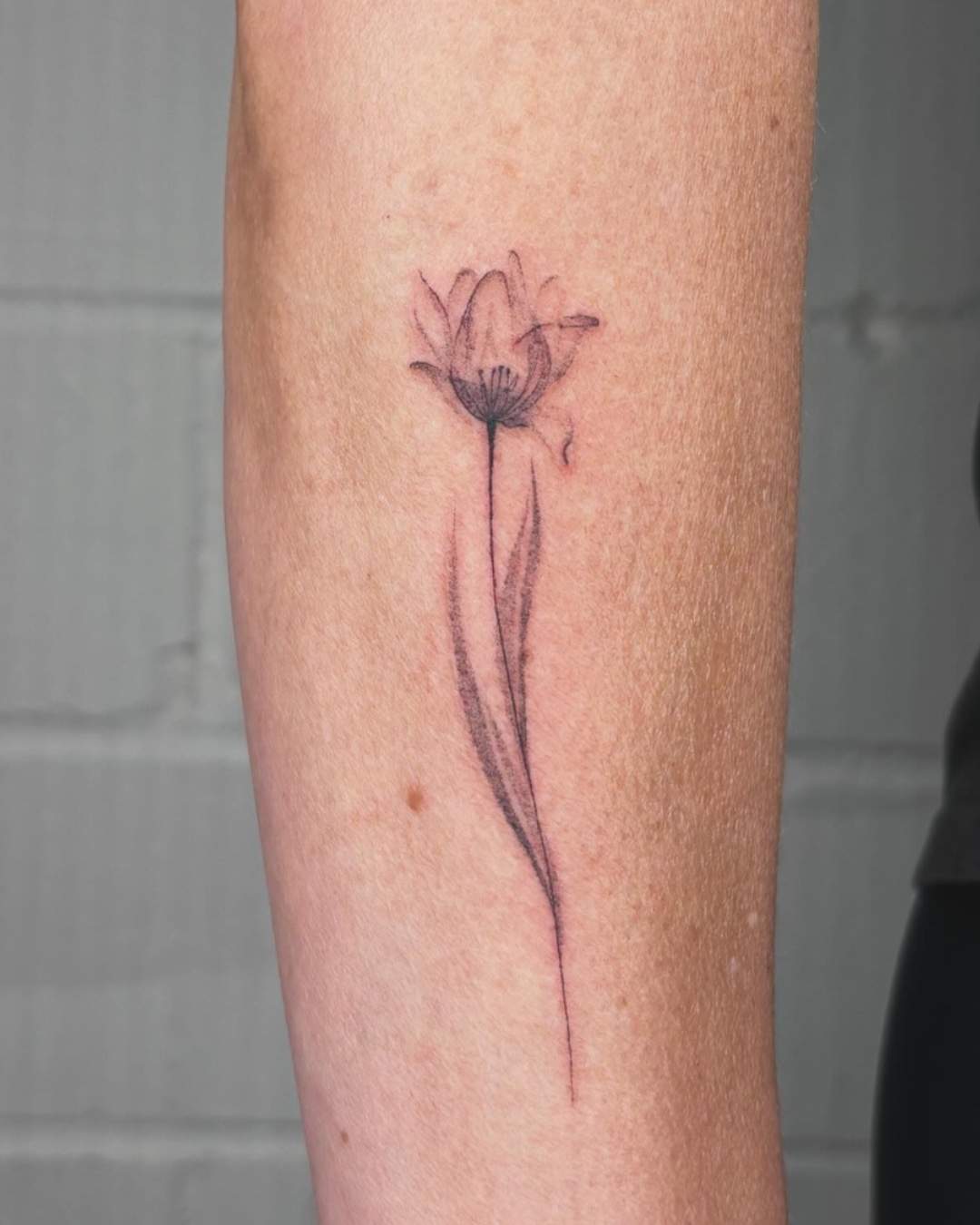
X-ray tattoos, anywhere

Filters
2 tattoo artists
X-ray tattoos show what lies beneath, as on a radiograph: bones, skeletons and inner structures glowing through a see-through outline.
On YokoFolio, pick the style X-ray and then your city, and widen the radius if needed. Look for smooth, controlled black & grey, because the glow of the bones depends on gradients, and for anatomical accuracy: the bones should be in the right place, at the right scale. The best pieces line up with the real anatomy of their placement. Healed photos show whether the soft, translucent layers held up.
Where it can match what's underneath: the bones of the hand on the back of the hand, the fingers, the wrist, the ribcage on the side, the knee, the foot, the spine. The effect is strongest when the tattoo lines up with the real skeleton, so the artist will place it on you before tattooing. For subjects that aren't anatomical — a flower, an animal, an object — any area with enough room for the two layers works. Keep in mind that hands, fingers and feet fade faster than most areas, and soft gradients show it first: ask your artist about touch-ups before choosing them.
Most are black & grey: the look of a radiograph is made of grays, with pale bones standing out and soft gradients giving depth. Some artists add a cold blue or teal tint to recall the light of an X-ray screen, sparingly. Full color is rare, because it pulls the image away from the radiograph. If you love color, a flower or an animal half in color and half in X-ray is a good compromise.
Not quite. A skull or a skeleton drawn as a solid motif is a subject, and it can be drawn in any style — traditional, realistic, engraving. An X-ray tattoo is defined by the see-through effect: the bones are seen through a surface, inside a hand, a body, an animal or an object, as on a radiograph. If there's no outer layer to see through, it isn't X-ray.