Filters

2 tattoo artists
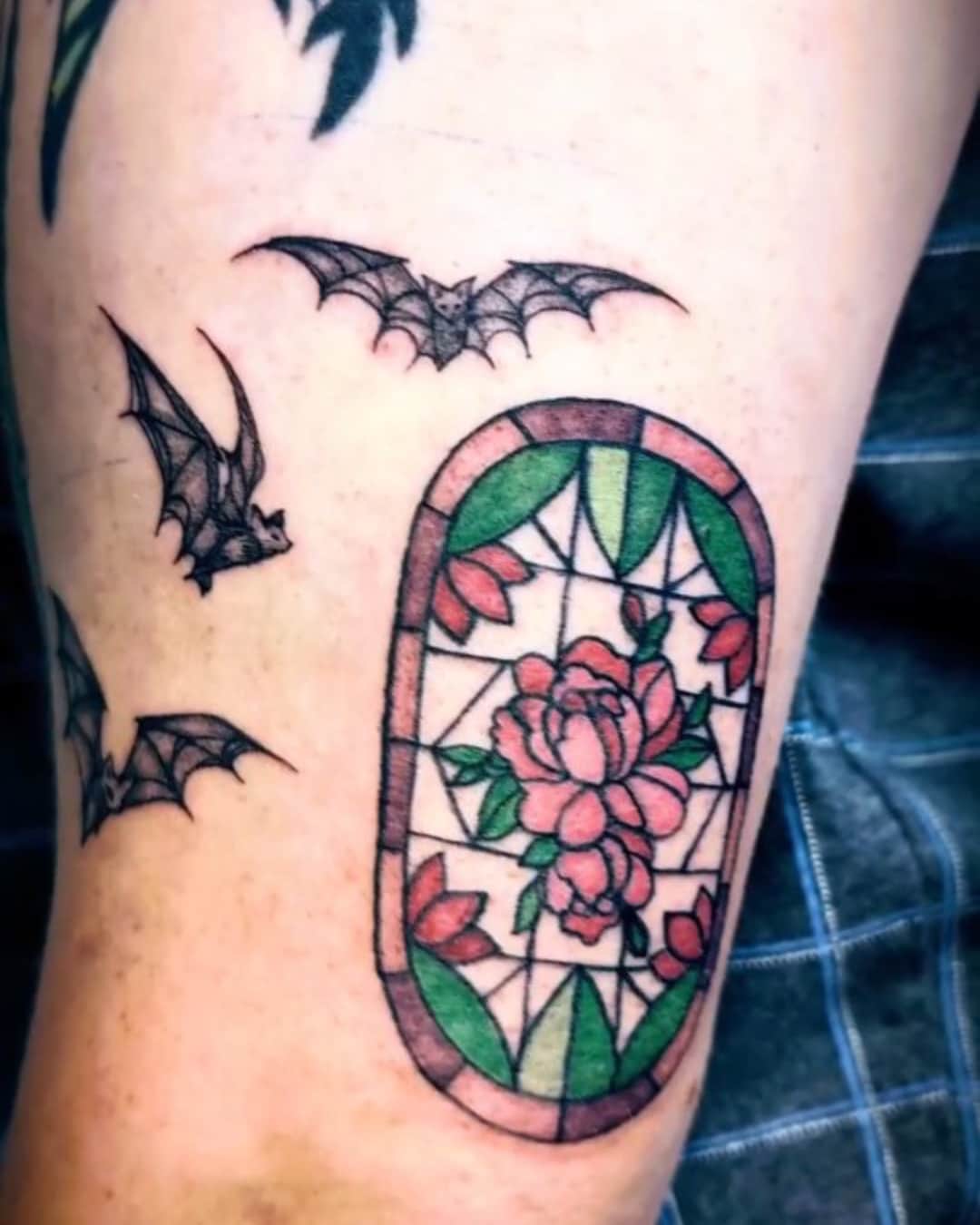
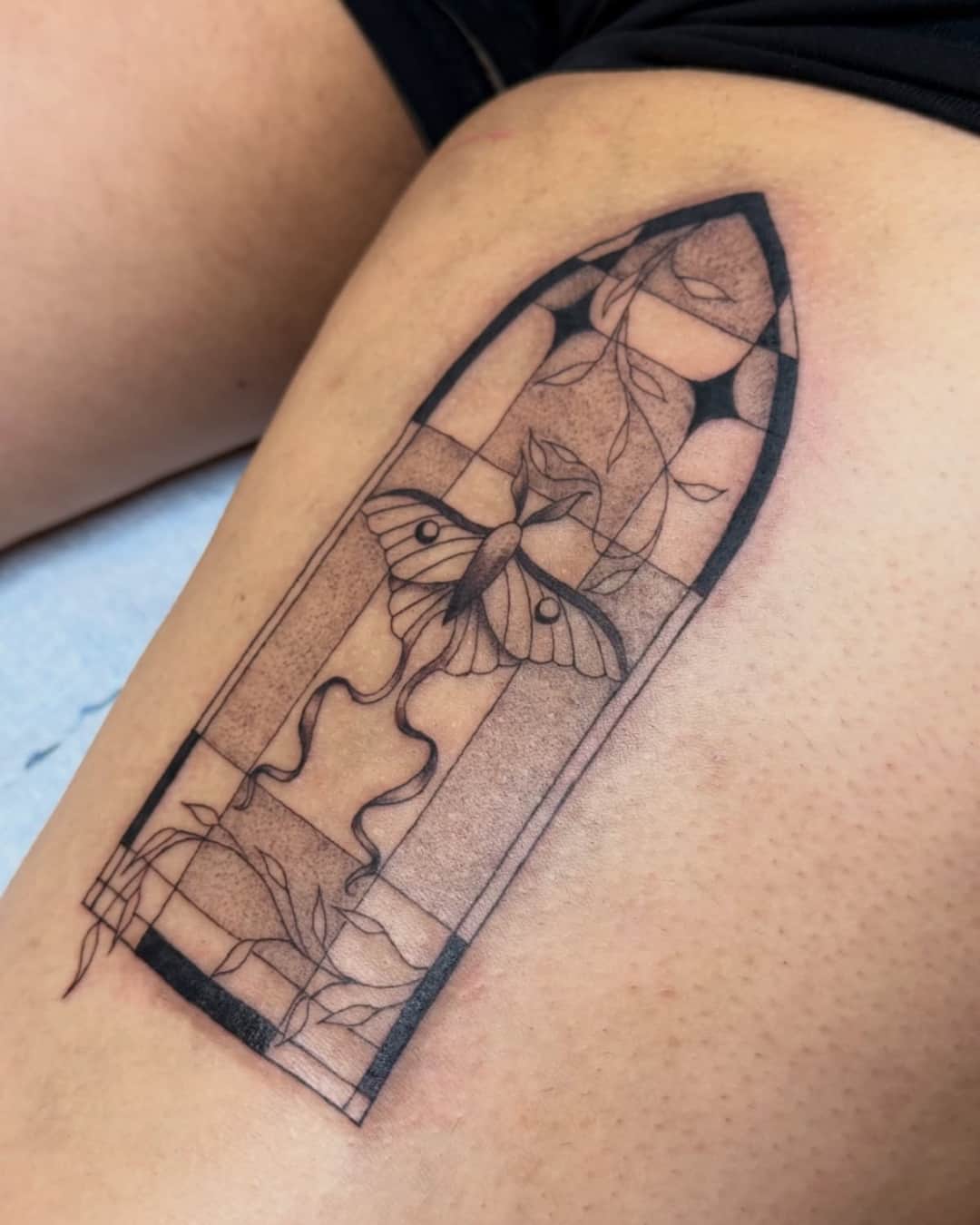
Stained glass tattoos imitate church windows: thick black lead lines divide the design into cells of bright, glowing color.
On YokoFolio, pick the style Stained Glass and then your city, and widen the radius if needed. Look at the lead lines — thick, even, closed shapes with no gaps — and at the color packing: each cell should be filled solidly and evenly, so that the glass glows. The glow effects and highlights should be consistent across the piece. Healed photos show whether the colors stayed bright between the black lines.
Color is what makes the glass glow, so most pieces are bright: deep blues, reds, greens, ambers and purples. But black & grey stained glass exists too, playing with shades of grey and white highlights between the lead lines, and it can be very elegant. What defines the style is its structure — cells divided by bold black lines — more than its palette.
Rose windows and circular mandalas, saints, angels and Madonnas, the Sacred Heart, flowers like roses and lilies, butterflies and moths, birds, the moon and the sun, animals and even portraits split into pieces of glass. Arched shapes recall a church window and suit the forearm, the calf or the back. A simple subject with large cells reads best — tiny cells blur over time.
Both use bold black outlines and strong colors, but they treat the inside of the shapes differently. Neo-traditional models volume with shading and gradients. Stained glass divides the design into flat cells separated by lead lines, each filled with one color, sometimes with a glow, like pieces of glass. If the shapes are shaded in depth, it's Neo-Traditional; if they're split into glass cells, it's stained glass.