Porcelain tattoos, anywhere

Filters
1 tattoo studio
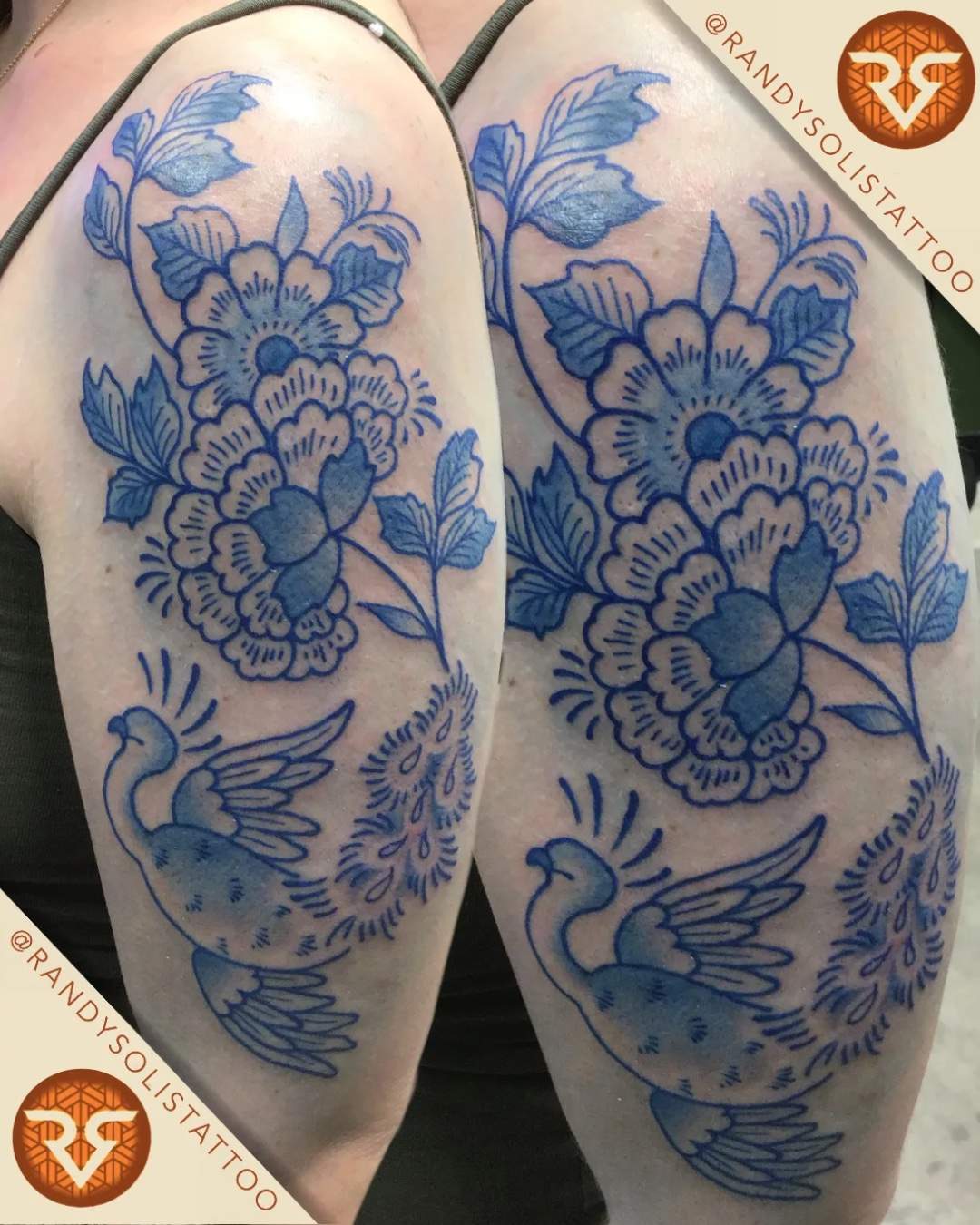
Porcelain tattoos borrow the cobalt blue of painted china — Ming vases, Delftware, the willow pattern — and lay it straight onto the skin.
On YokoFolio, pick the style Porcelain and then your city, and widen the radius if the list is short. Look at how the artist handles a single blue: the washes should be smooth and even, the linework fine and steady, and the light parts of the design left as clean skin, like the white of the glaze. A good porcelain piece reads from across the room as an object. Ask for healed photos — blue only shows its true depth once the skin has settled.
Blue, almost alone: cobalt, indigo or a softer delft blue, in two or three values from pale wash to deep line. The skin plays the part of the white porcelain, so nothing else is needed. Some artists add a touch of black to sharpen the drawing, or gold for kintsugi cracks, but the more colors come in, the less it reads as china. If you want several colors, look at watercolor or illustrative work instead.
The china's own motifs: peonies, lotus flowers, chrysanthemums, dragons, phoenixes, carp, cranes, waves and clouds, Delft windmills and tulips, willow-pattern scenes with their bridge and birds. You can also tattoo the object itself — a vase on the forearm, a plate on the shoulder blade, a teacup, broken shards held together with gold. Rounded areas like the shoulder, the thigh or the calf suit vases and plates, because the curve follows the body.
Like any tattoo, it softens over the years: fine lines spread a little and pale washes fade first. A few things help. A design with enough contrast between deep blue lines and lighter washes keeps its drawing even when it blurs slightly, and a size generous enough lets the details breathe. Protecting it from the sun once it has healed keeps the pale blues clear longer, and your artist can tell you when a touch-up is worth it.