Filters

1 tattoo artist
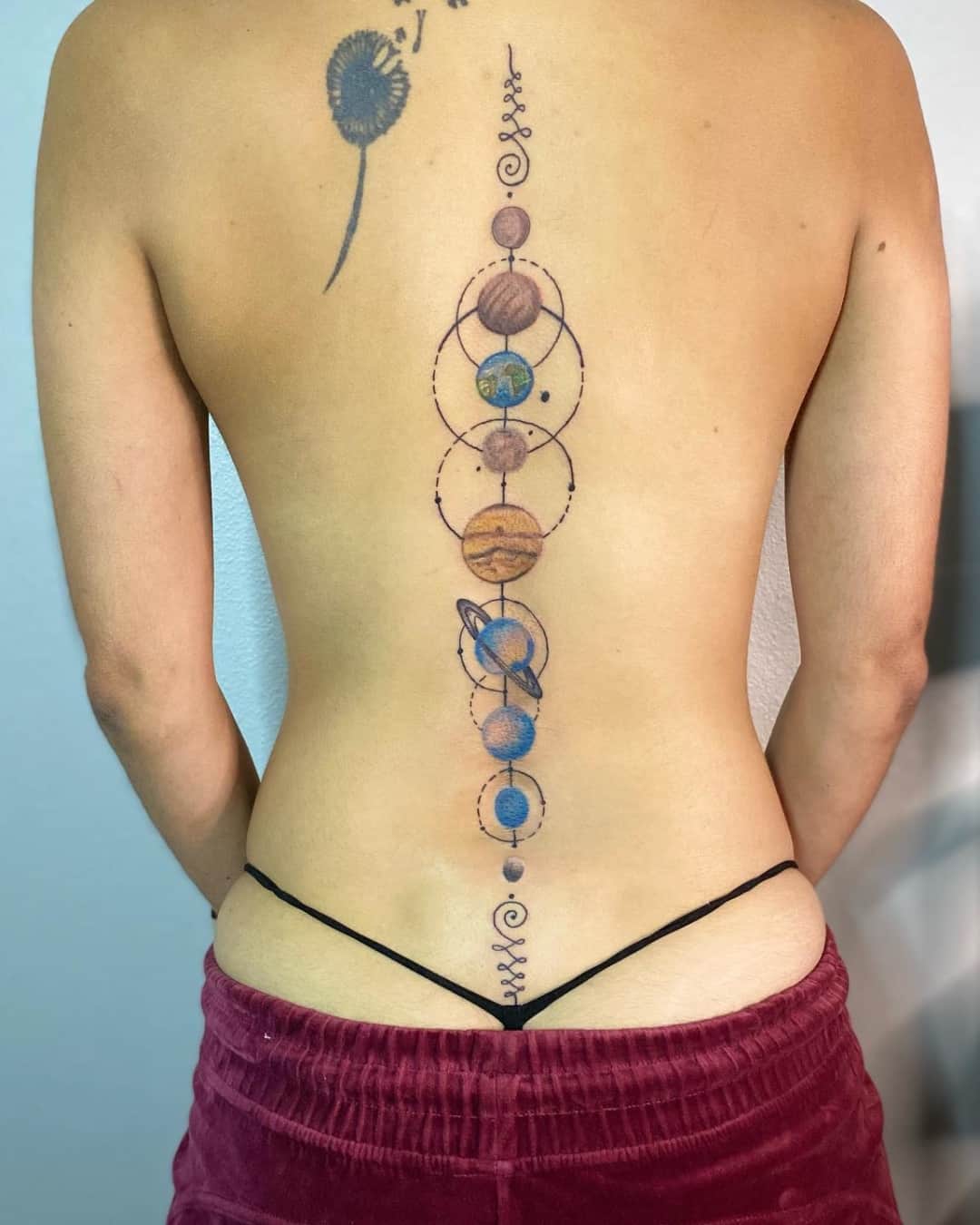
Geometric tattooing works in circles, patterns and symmetry. It represents nothing, and it forgives nothing.
On YokoFolio, pick the style Geometric and then your city, and widen the radius if you need to. This style forgives nothing: check whether the circles stay round once they're on an arm, whether the symmetries are true, whether the patterns keep the same spacing end to end. A good artist also shows stencils fitted on skin before the session — that's the sign they compose on the real volume and not on a flat sheet.
The mandala is still the most requested design, because it adapts to almost any area. Then come animals built out of facets — wolf, lion, owl, deer — where the geometry draws the volume. Abstract compositions of circles, triangles and patterns work very well as a band or across a shoulder. Choose for the area as much as for the subject: a round shape needs a wide, fairly flat surface to stay true.
It's one of its best uses: patterns can run from shoulder to wrist and wrap the whole limb. Two places decide whether it works, and those are what to look at in a portfolio — the shoulder, which is a ball, and the elbow, which bends. A pattern that crosses both without warping is the proof of skill. Budget a whole appointment for the linework alone, before any fill, and expect to pay session by session.
Yes, and it's a common pairing: a few lines, a triangle, an open circle, a constellation. The logic is the same — regularity is everything — but there's less material to absorb an imprecision, so placement matters even more. A straight line on a forearm has to look straight with the arm at rest, which often means offsetting it slightly. Have the stencil put on and move around in front of a mirror before you sign off.