1/6

6 tattoo artists · 1 tattoo shop
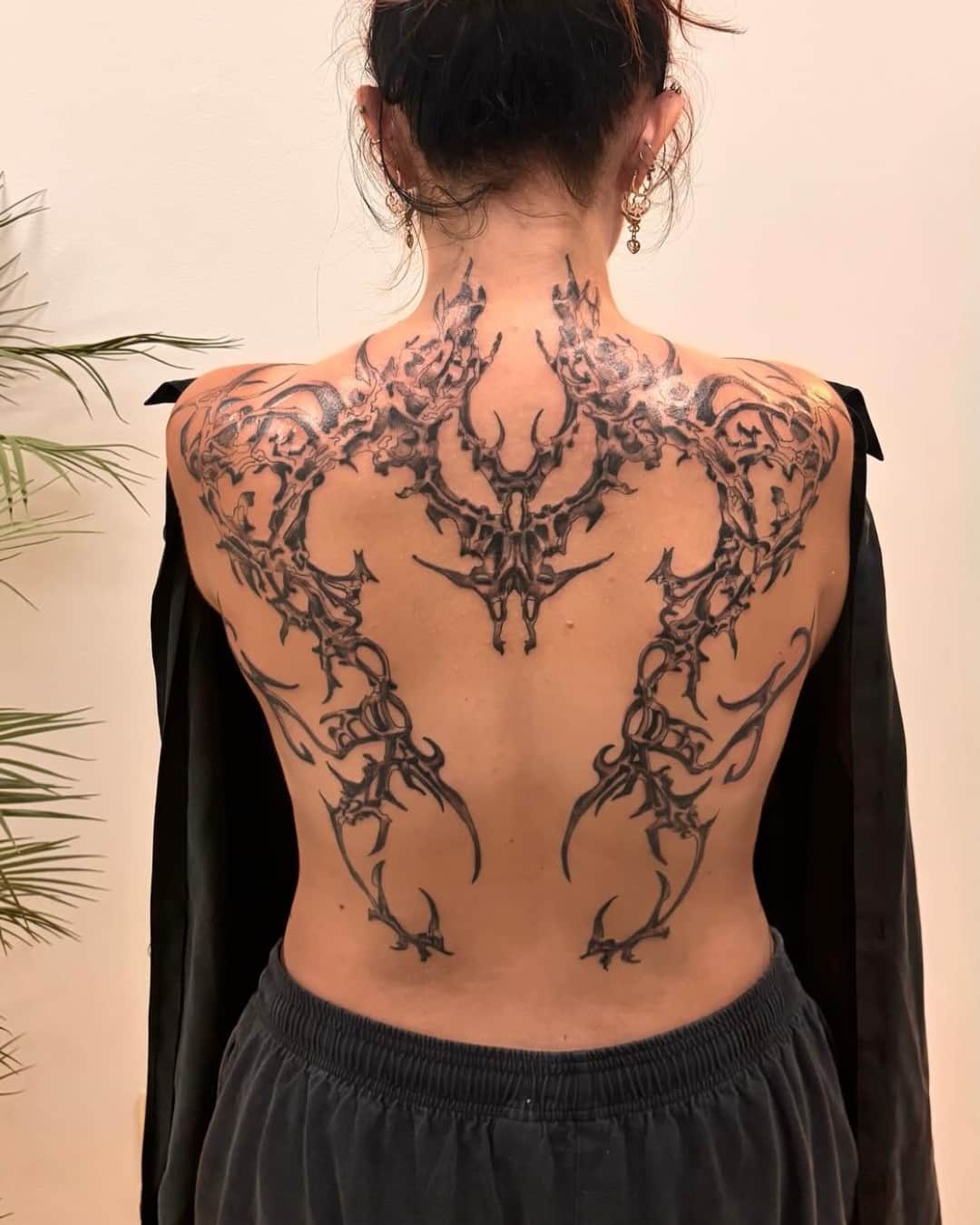
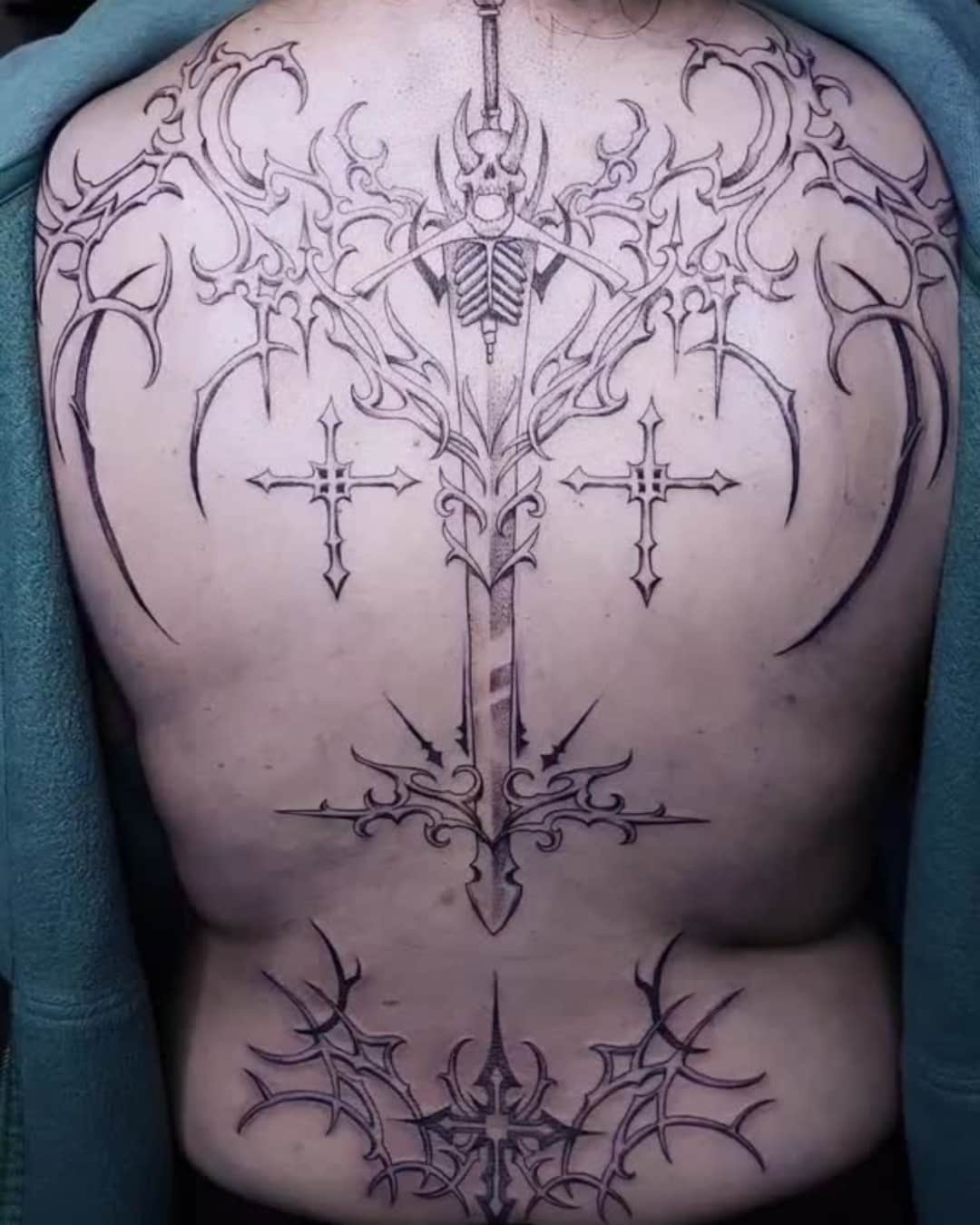
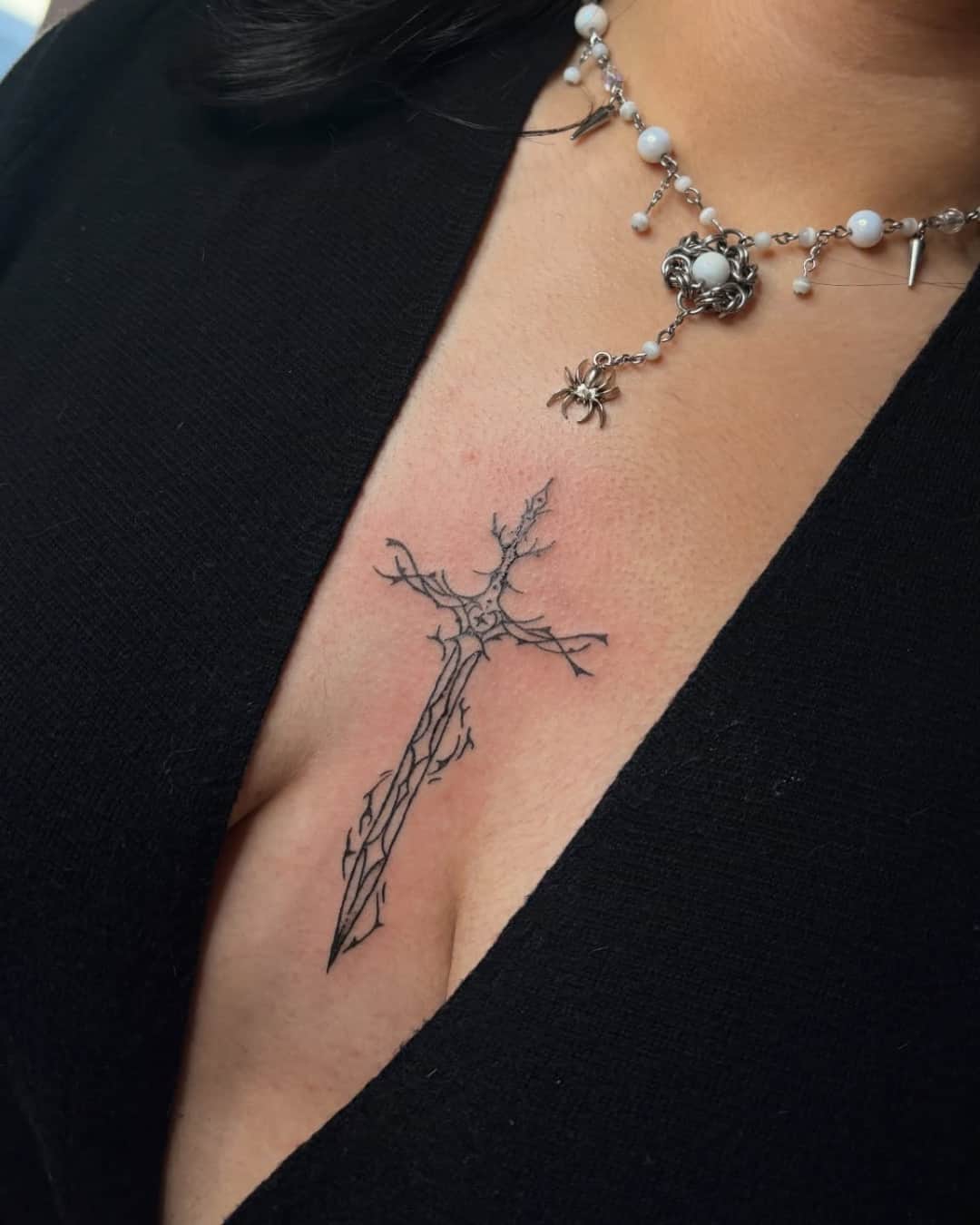
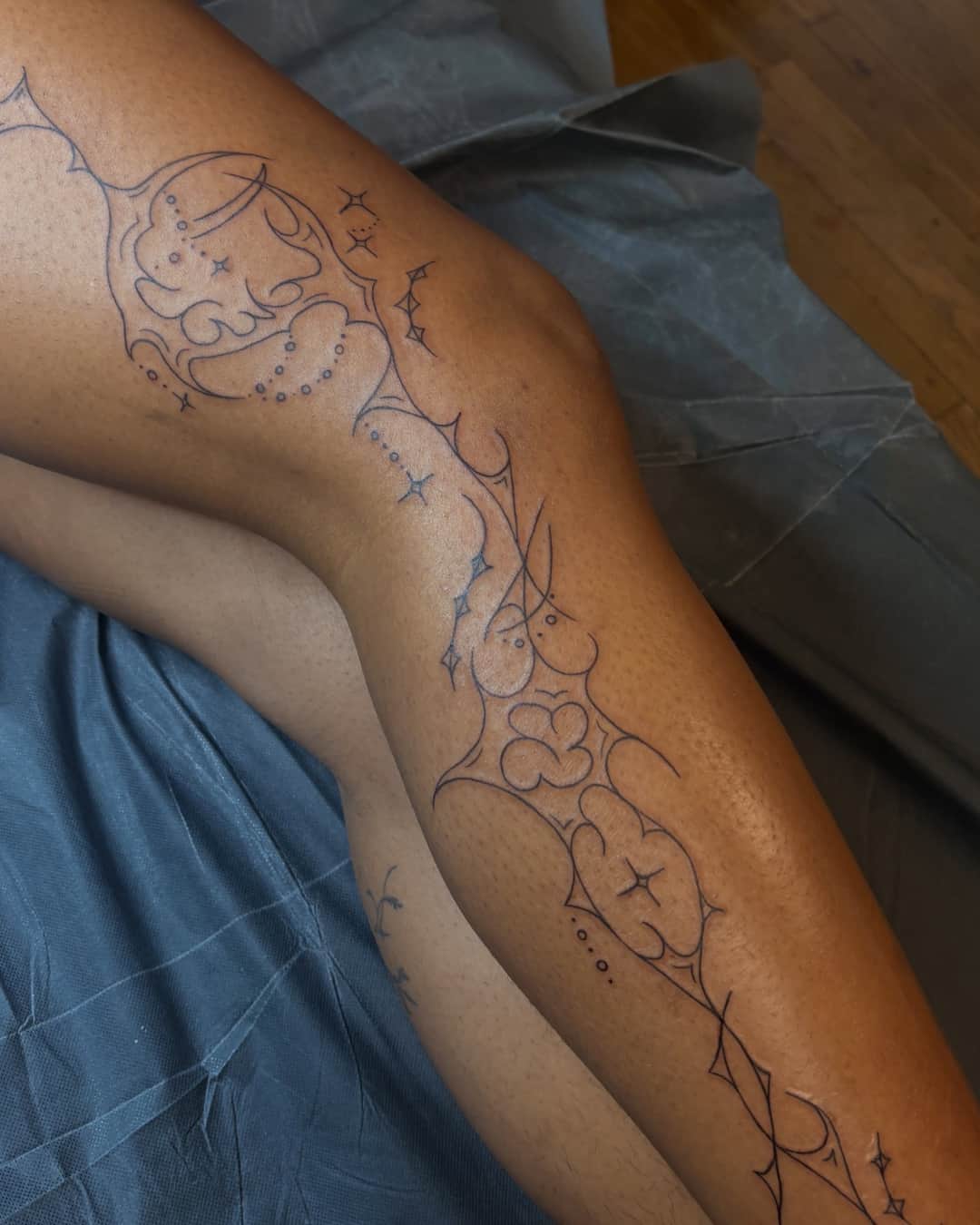
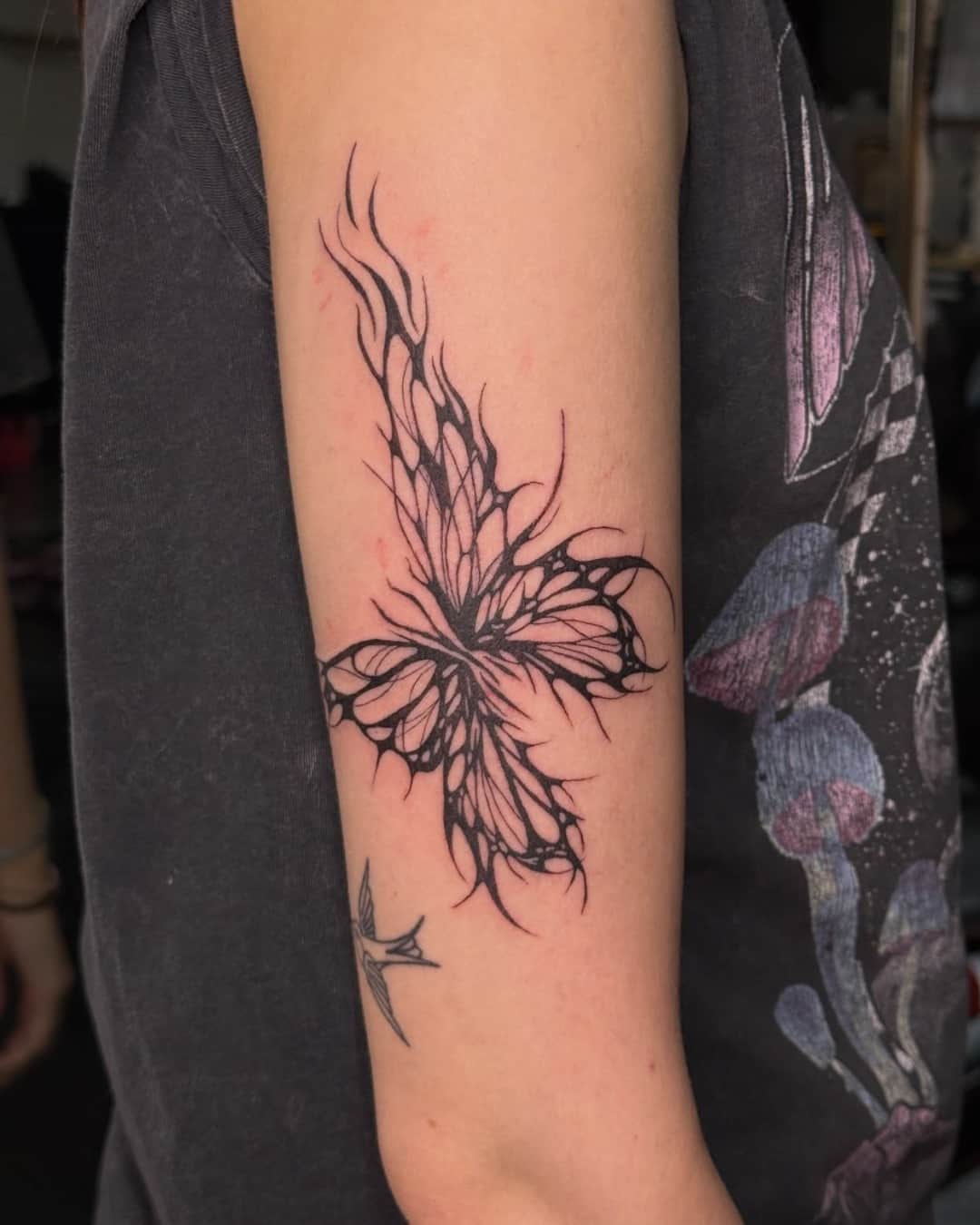
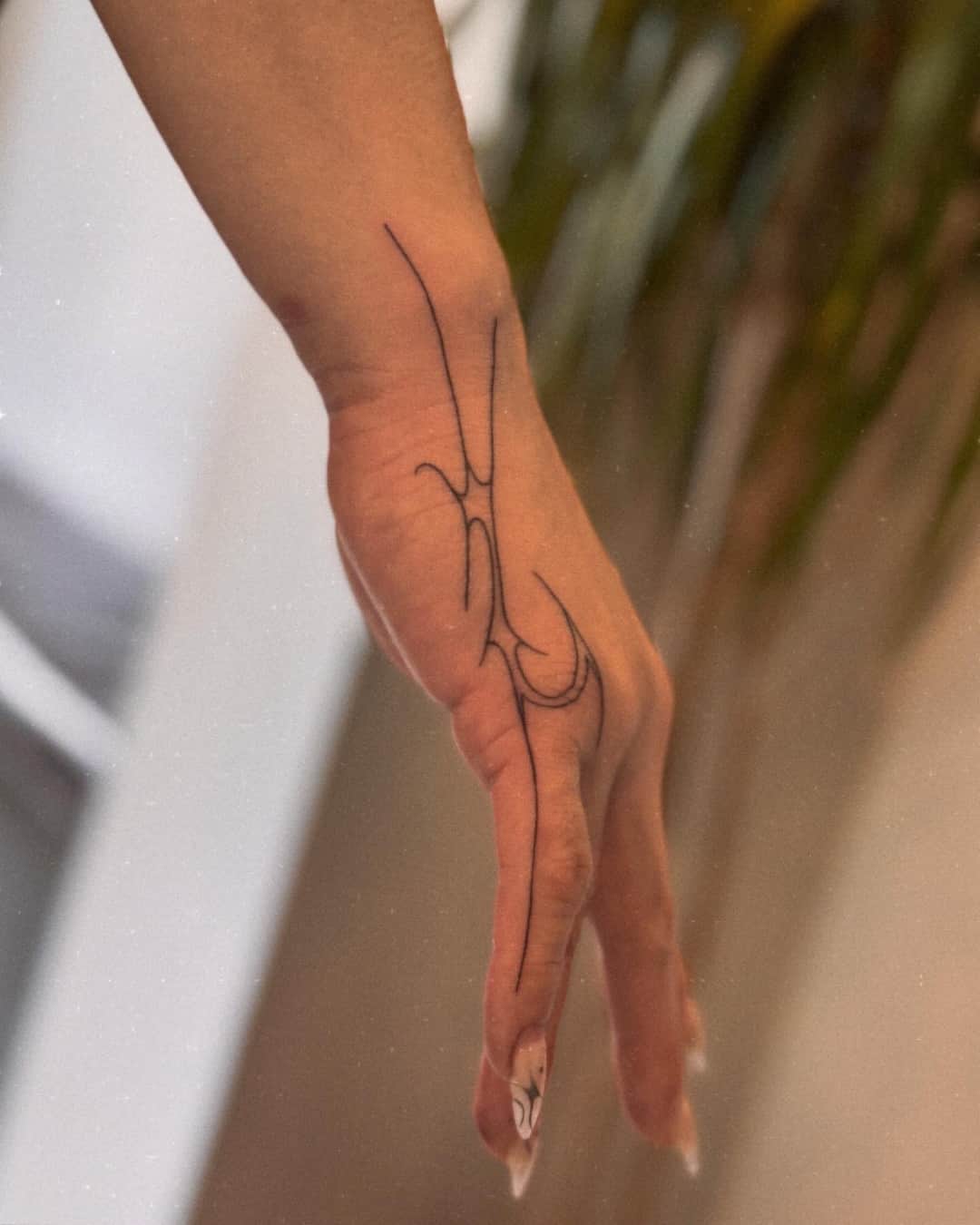
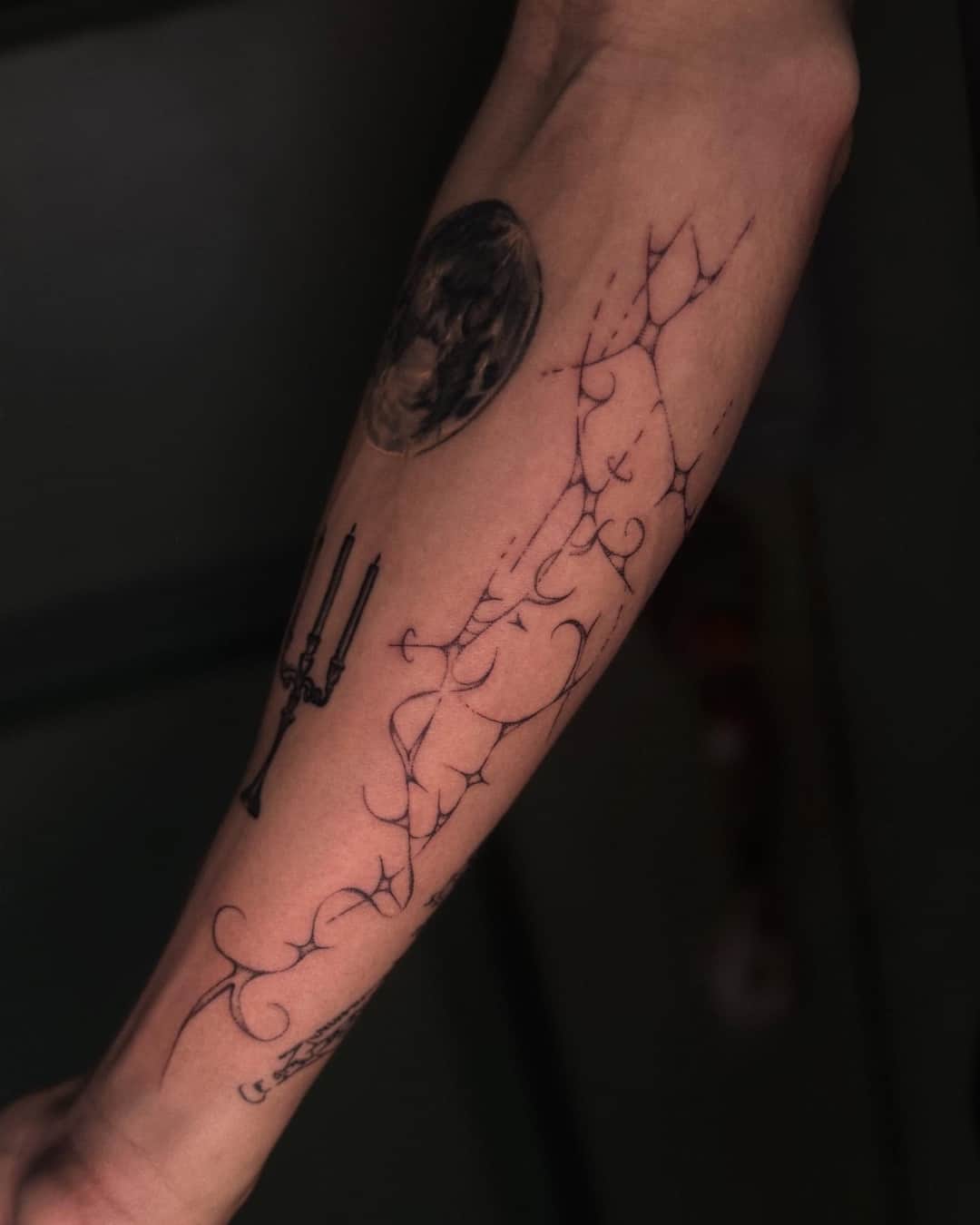
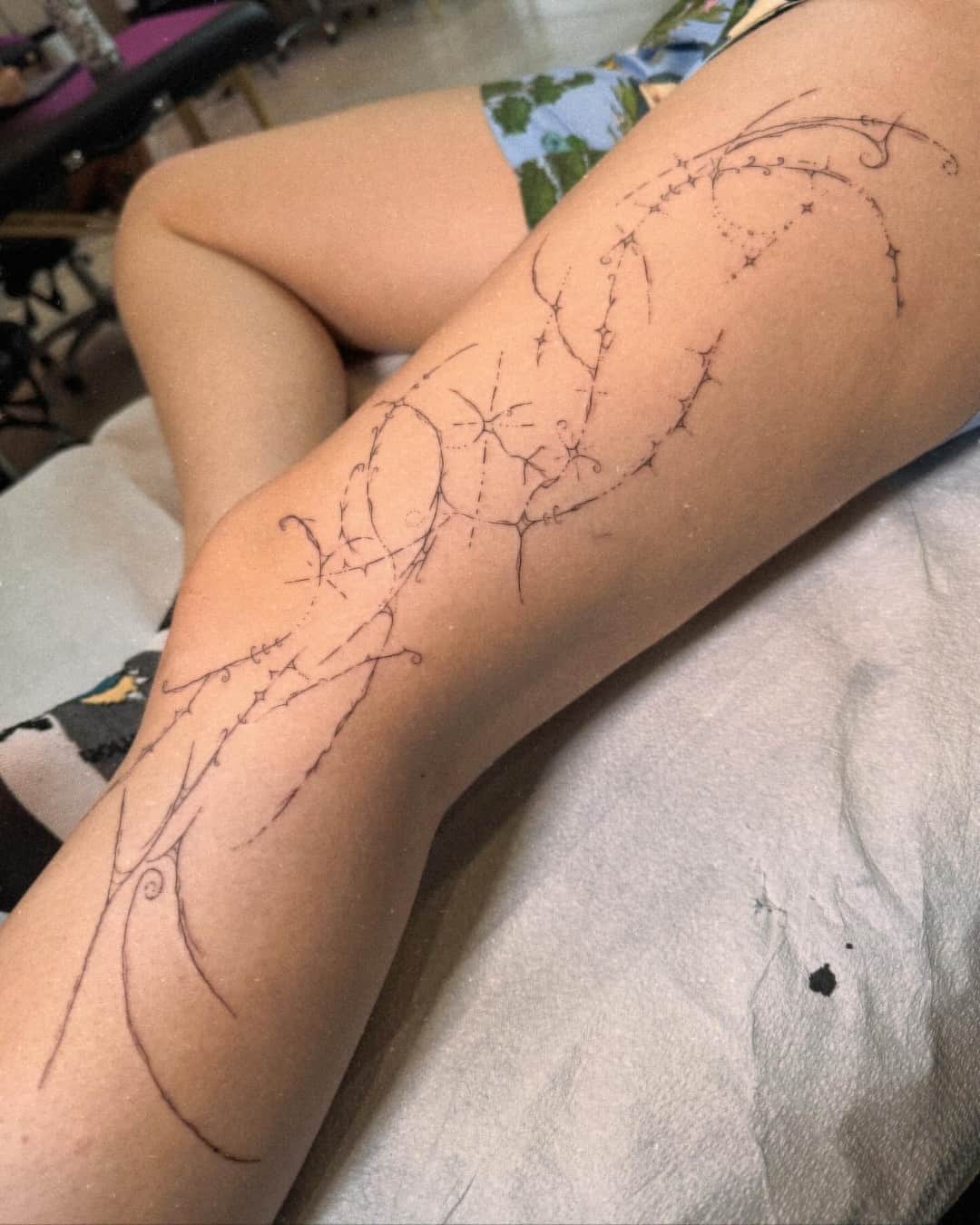
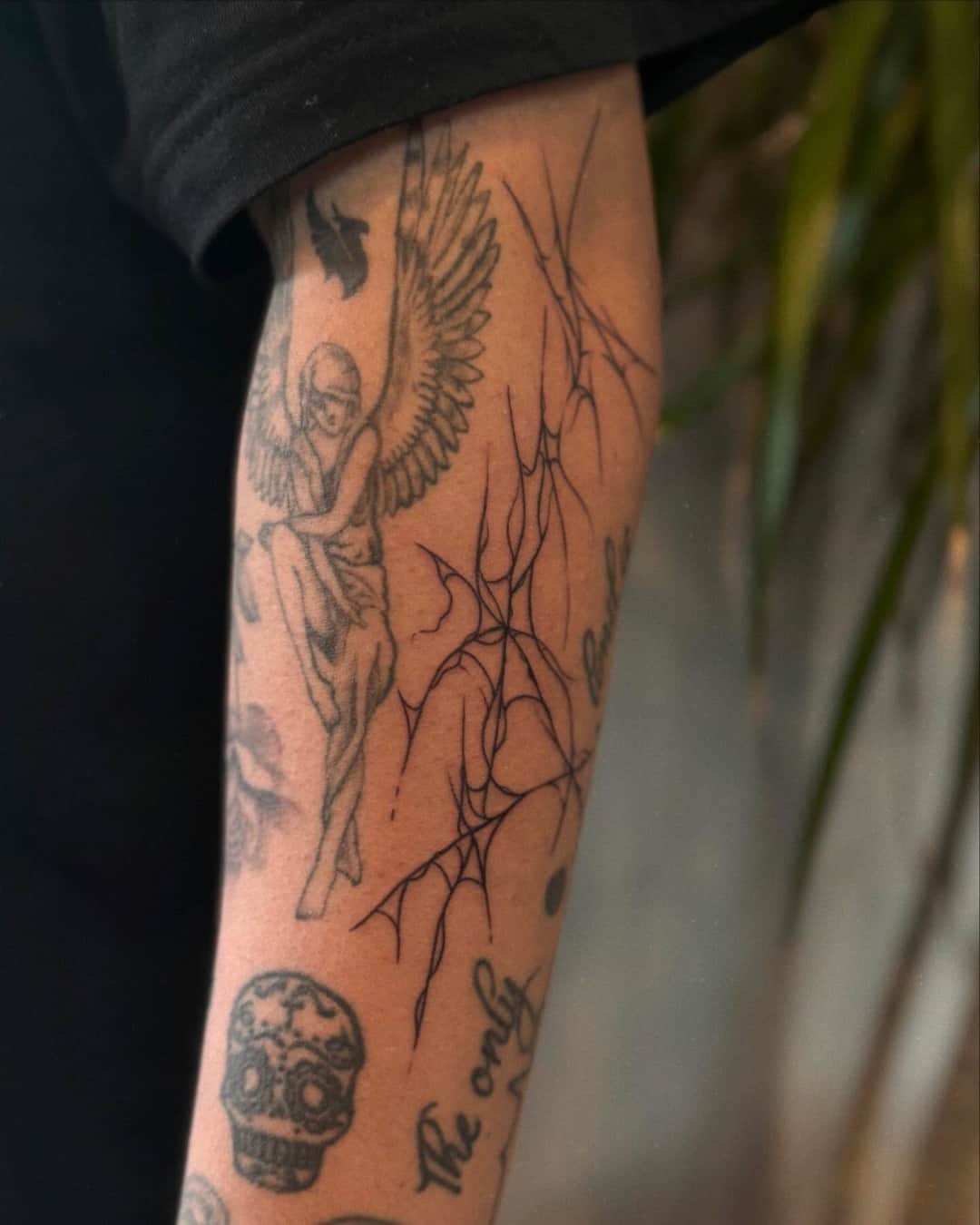
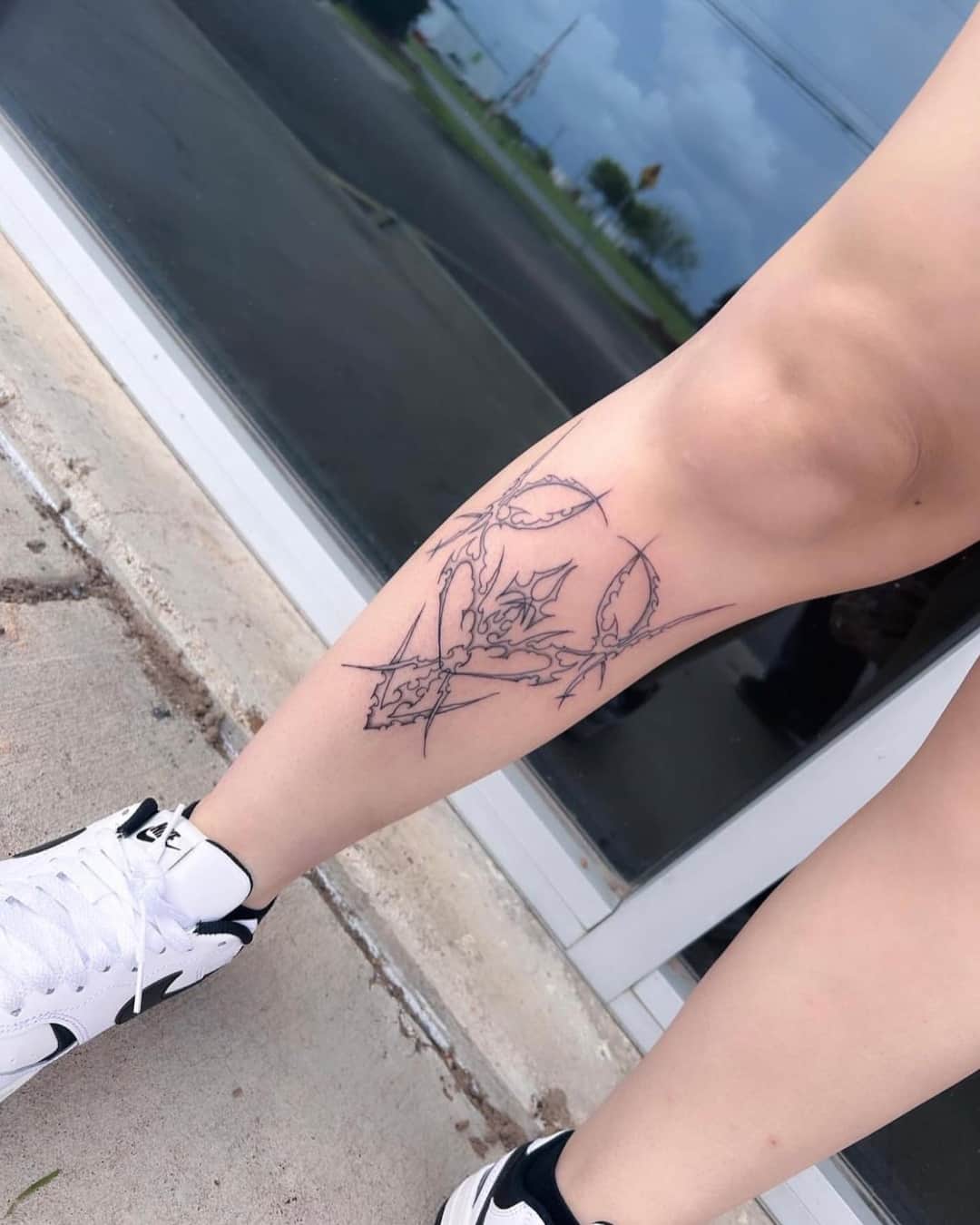
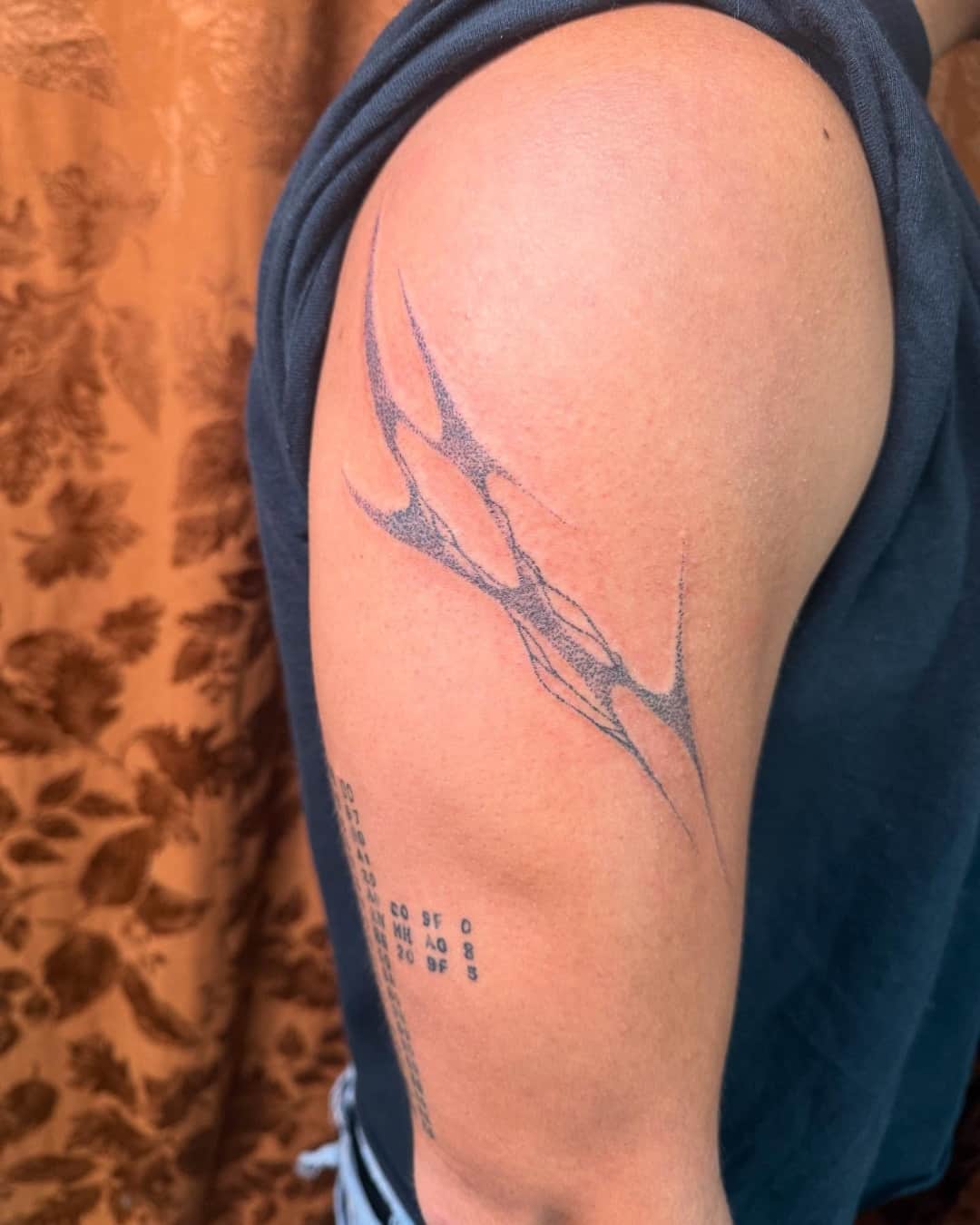
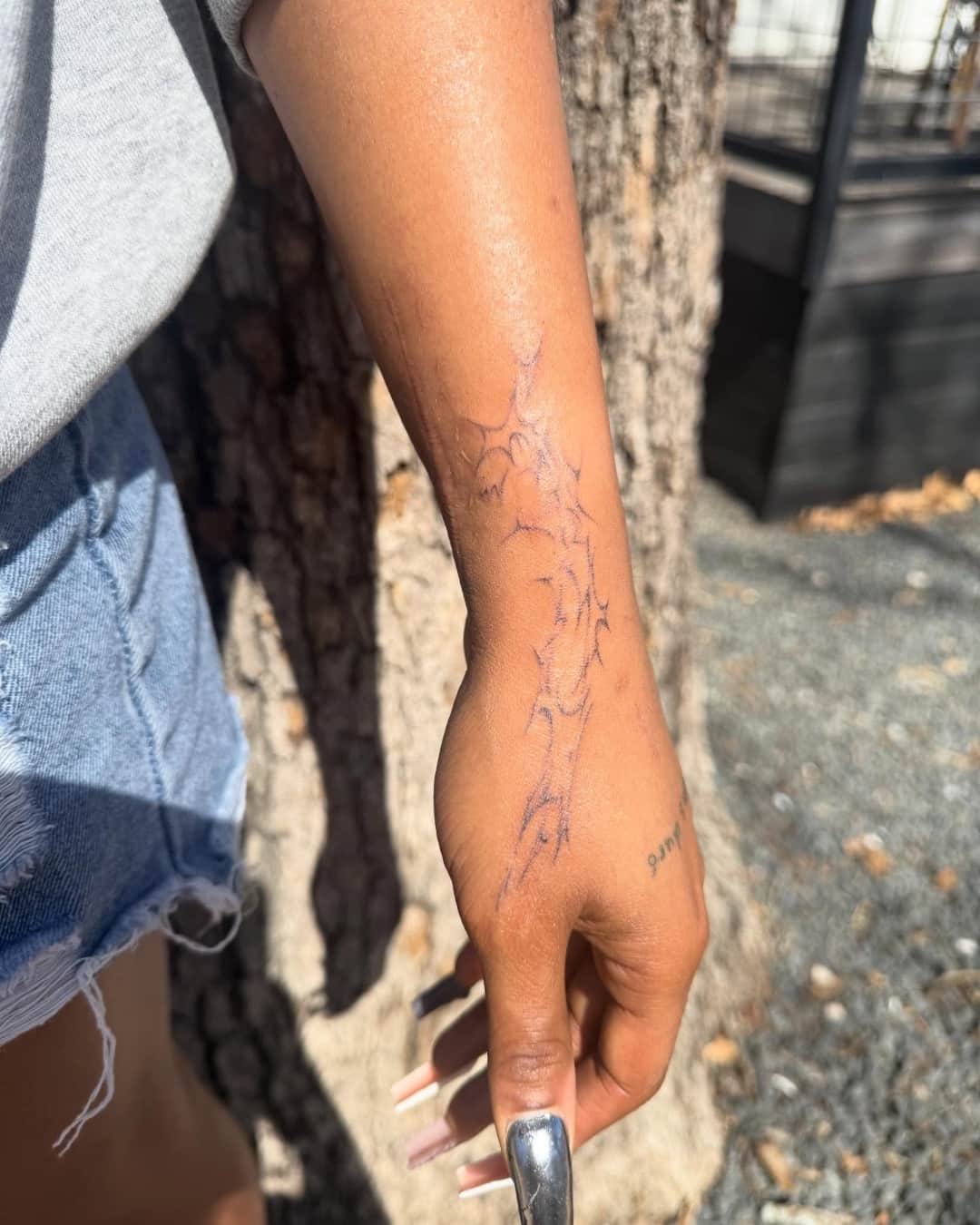
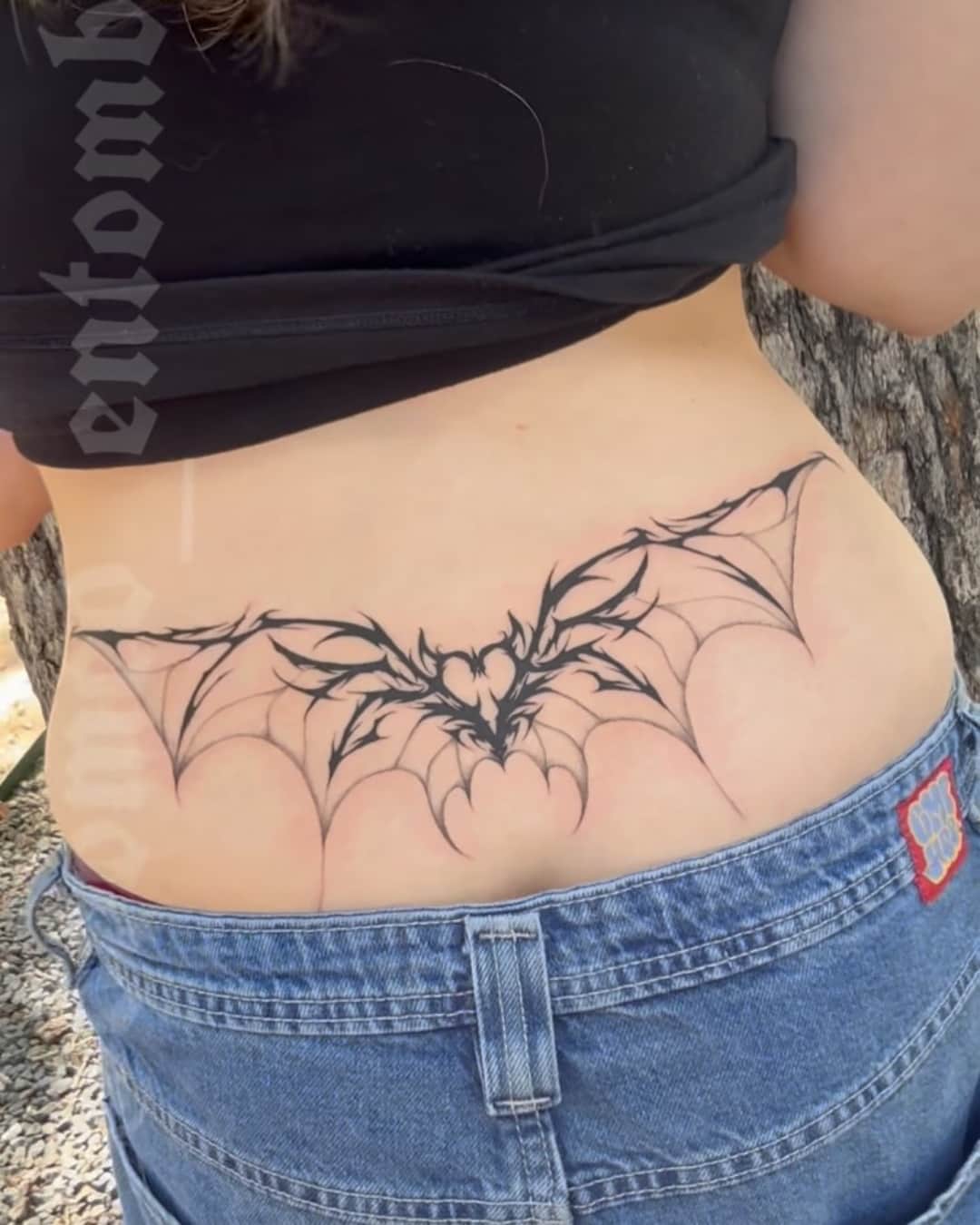
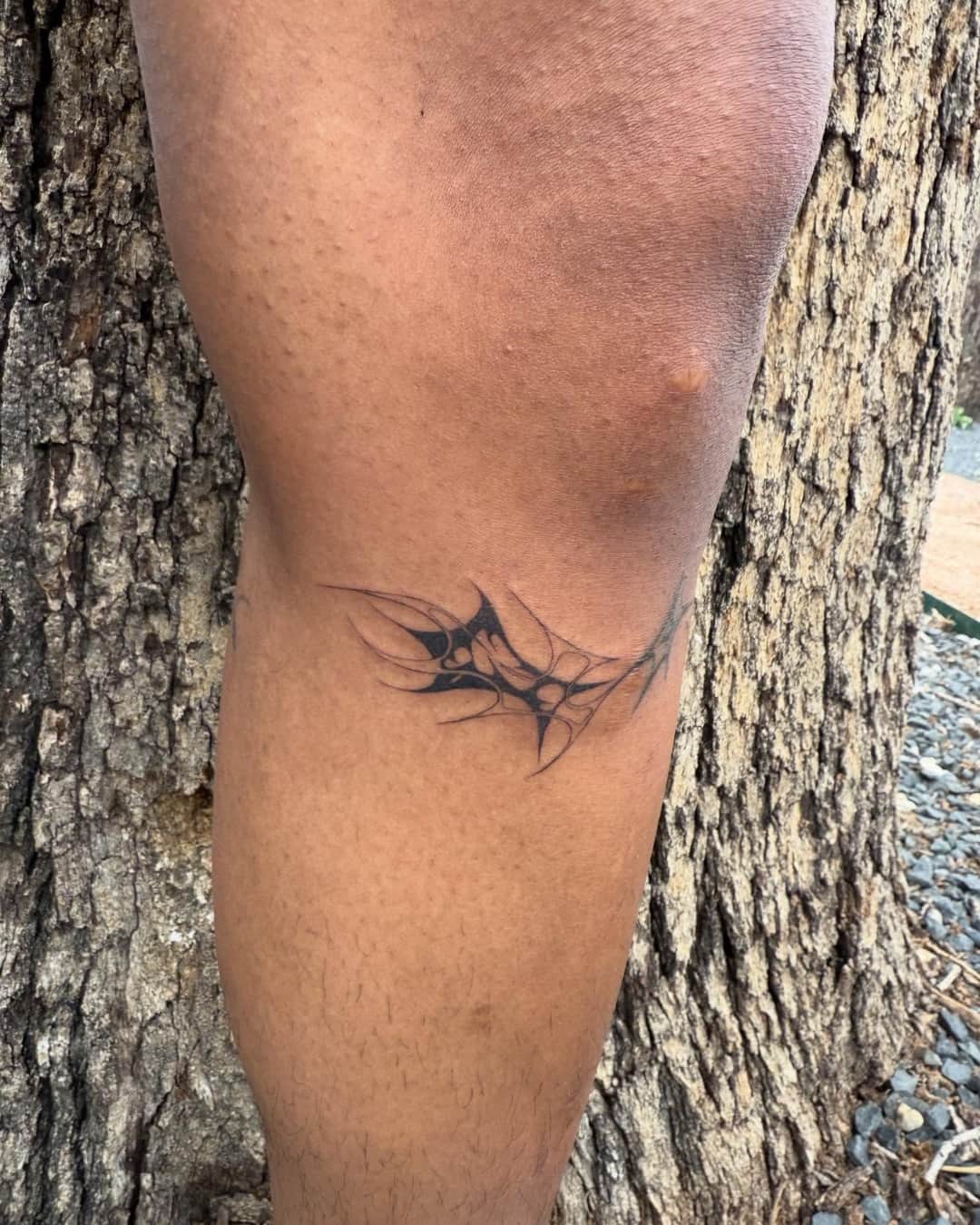
Cybersigilism pulls tribal toward the sign: thin black lines that branch and taper into thorns, in webs that follow the body.
On YokoFolio, pick the style Cybersigilism and then your city, and widen the radius: it's a recent style, still concentrated in bigger cities. Look at the points and the gaps: the filaments should stay separate, the points clean, and the long curves smooth, with no wobble or restart. On mirrored pieces, check that both sides match on the body, not just on paper. Look for healed work — that's where you see whether the points have rounded off and whether the tightest gaps have closed up. A good artist draws them more generously than you'd expect. When you contact the artist from their profile, ask whether they draw the design on your body, freehand or from a stencil, and how they place the points around joints and creases.
The word sigil points to a real tradition — signs drawn to condense an intention, often by reducing the letters of a wish to a single glyph — but contemporary cybersigilism mostly borrows the look, not the system. Most of these designs carry no coded meaning: they're shapes, made to follow the body. If the symbolism matters to you, say so, because some artists will build actual signs with you, from a word or an intention you give them. Once the letters stay readable, though, it's Lettering on YokoFolio, even in spiky or gothic letters. And if you're taking an existing symbol, read up: a few come from specific traditions and aren't decorative.
That's the question specific to this style. A tapered point is a line that ends in almost nothing: over the years the ink spreads and the point rounds off. The design stays readable but loses its edge, and the finest filaments can run together. Experienced artists compensate by drawing the points a little longer, keeping the gaps wider than they look necessary, and avoiding isolated threads that are too thin. A design whose main lines carry some weight, thickening where they branch before they taper, keeps its structure far longer than a net of hairlines. Placement counts too: the hand is in high demand and distinctly harder, because ink holds less well there, the points blunt quickly and touch-ups are frequent. And look at where the points land relative to the flex creases — one that ends inside a crease blunts faster.
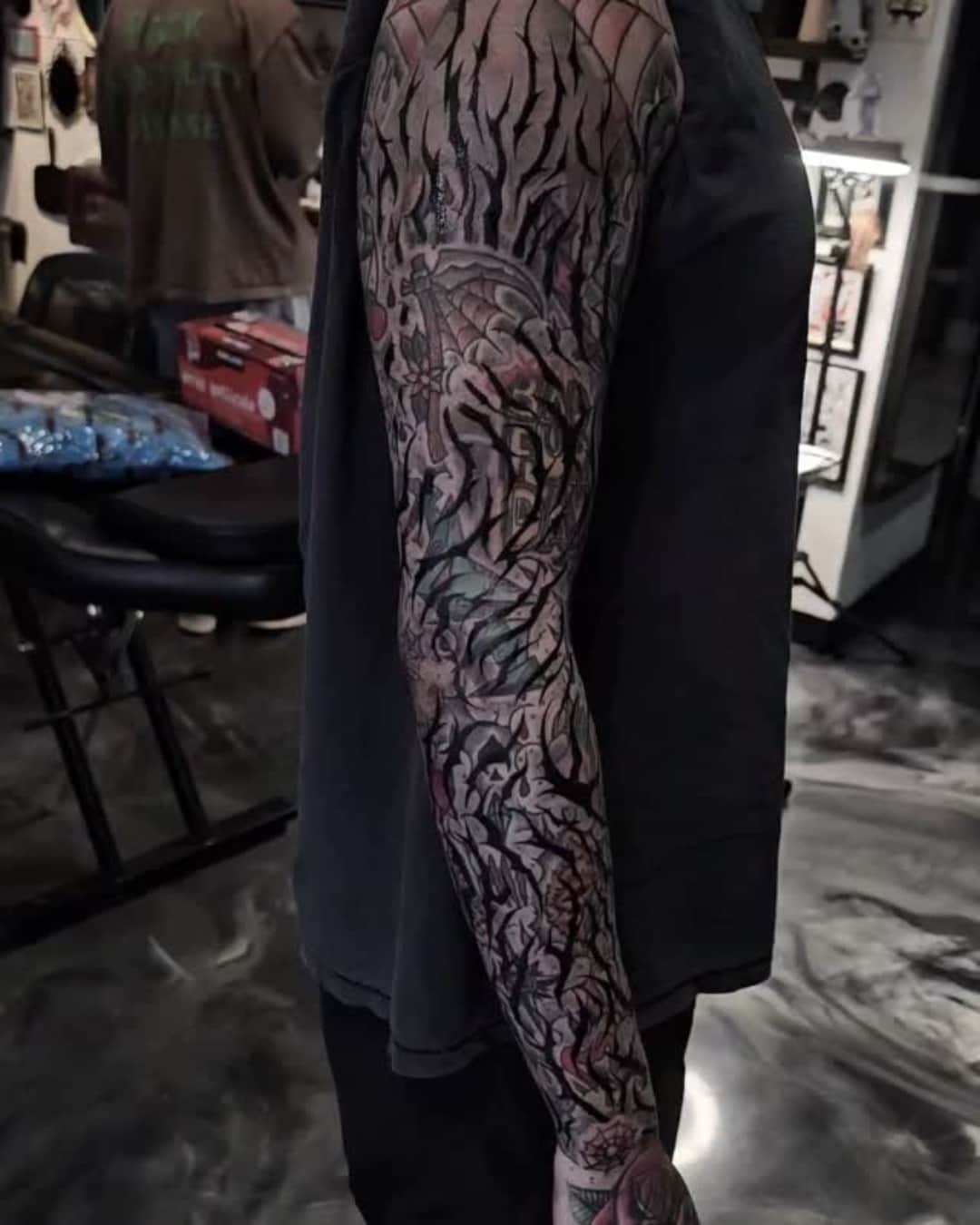
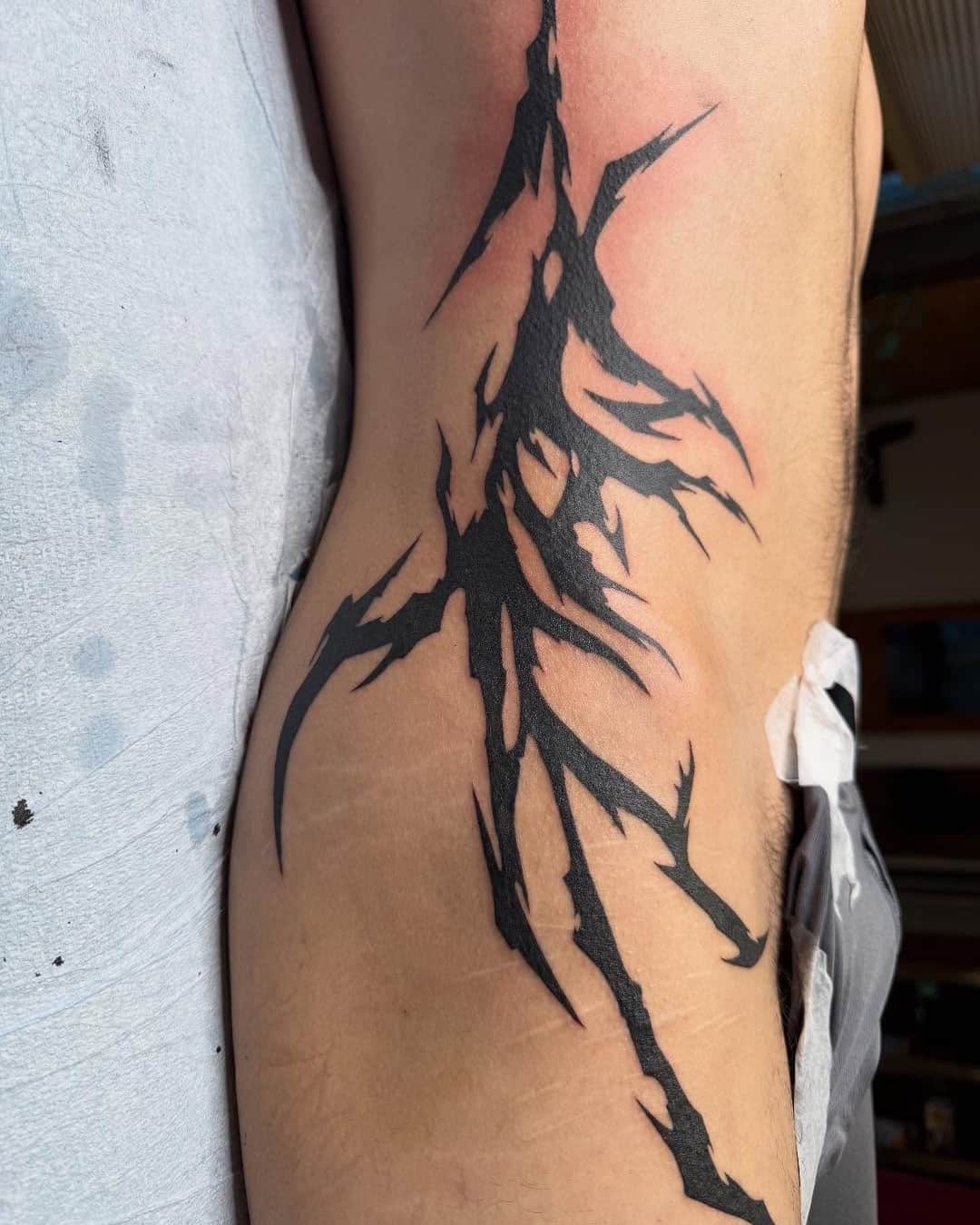
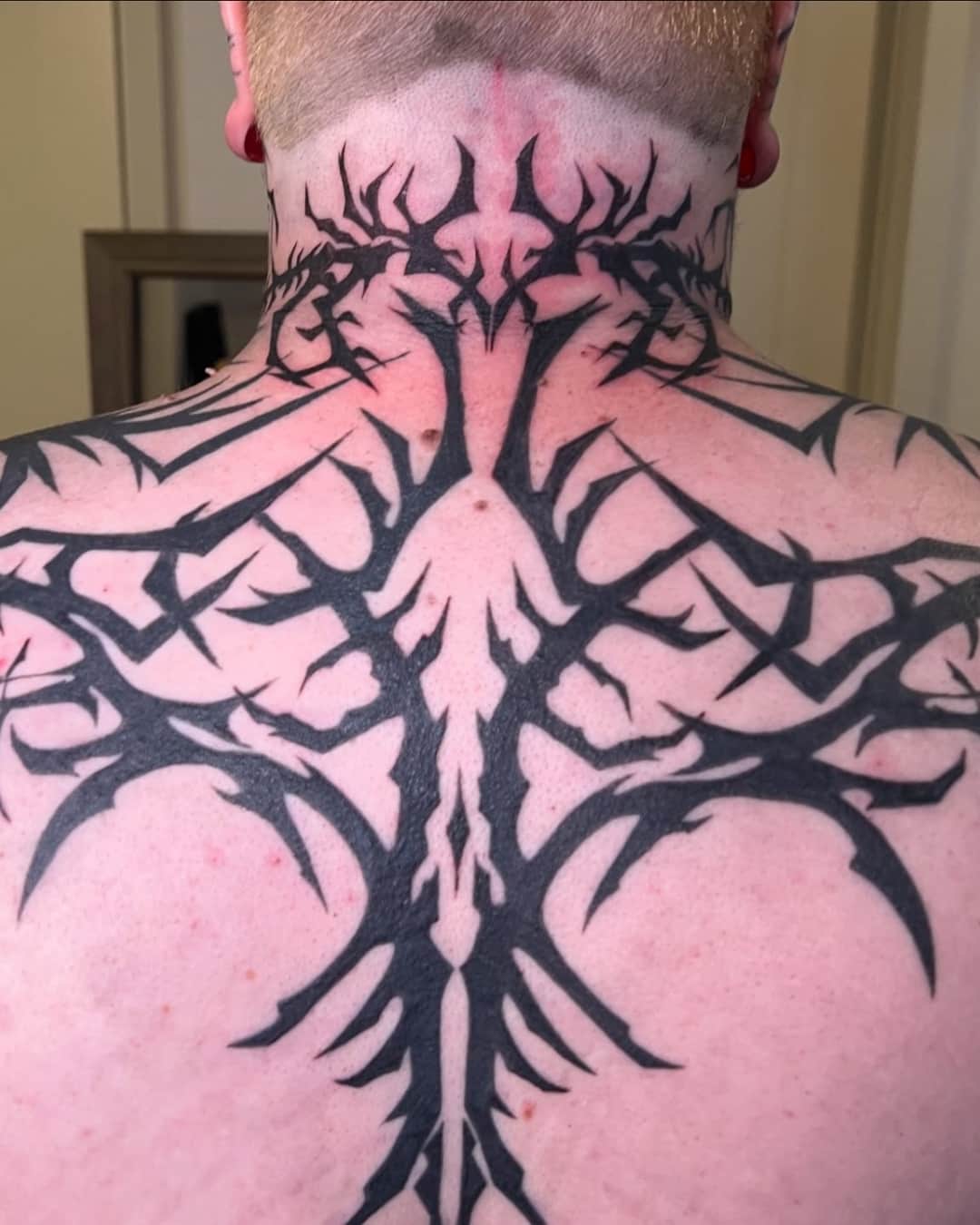
All three are black and often symmetrical, but they don't carry the same weight. Cyber-tribal is made of mass: bold, solid black blade shapes with a futuristic feel, sharp at the tips but heavy in the body. Cybersigilism has no mass at all — only thin, sharp lines that flow, branch and taper into thorns or needles, forming a web or a sigil, with no large solid black areas. Tribal is solid black too, in bold curved or angular shapes from the 1990s or from Borneo, Haida or Aztec art; from across a room it reads as dark shapes, where Cybersigilism reads as a fine net of lines. The styles often sit side by side, the web linking two heavier pieces. If the design is a web of thin lines tapering into thorns, with no solid black masses, it's Cybersigilism.