Bio-organic tattoos, anywhere

Filters
1 tattoo artist · 1 tattoo studio
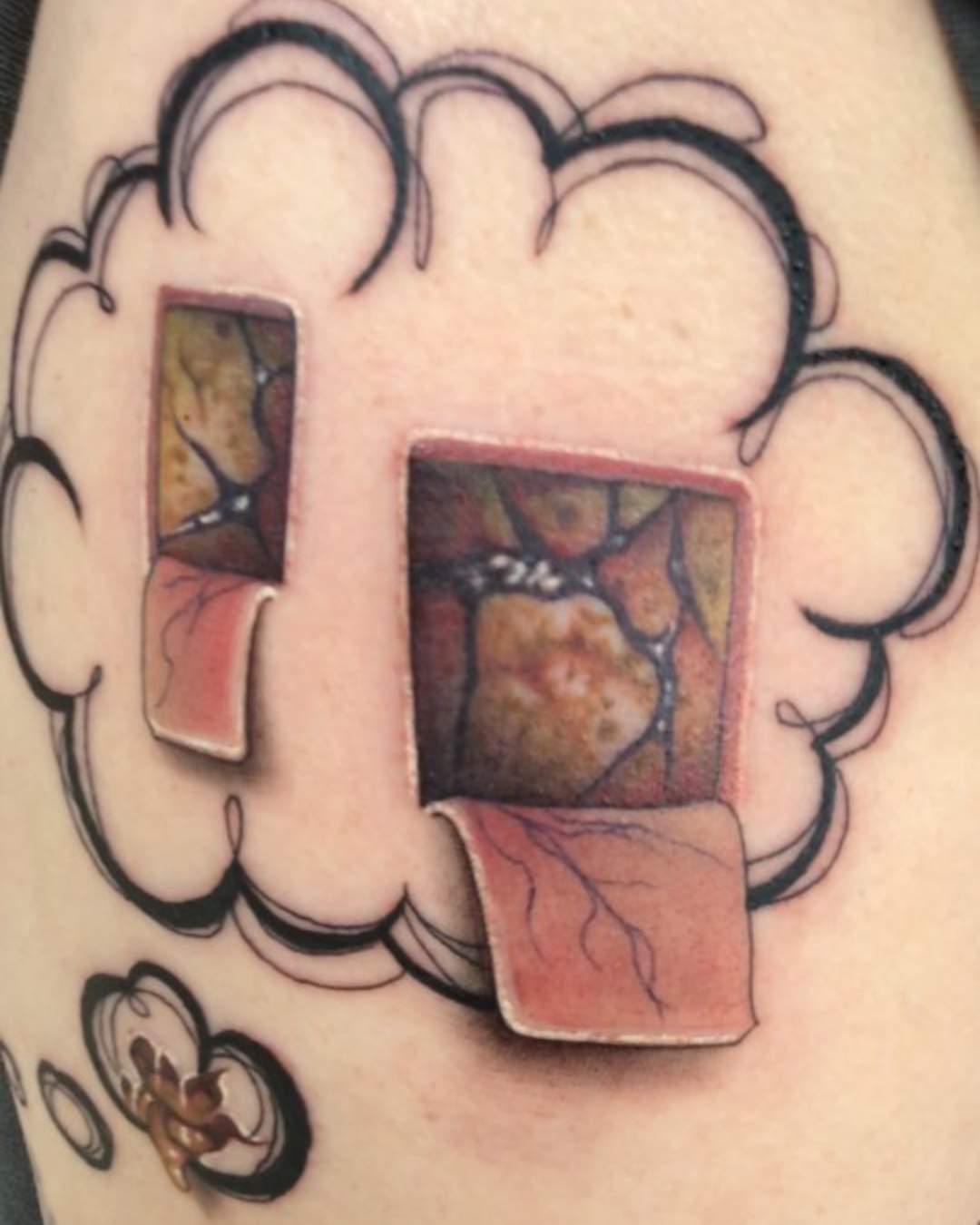
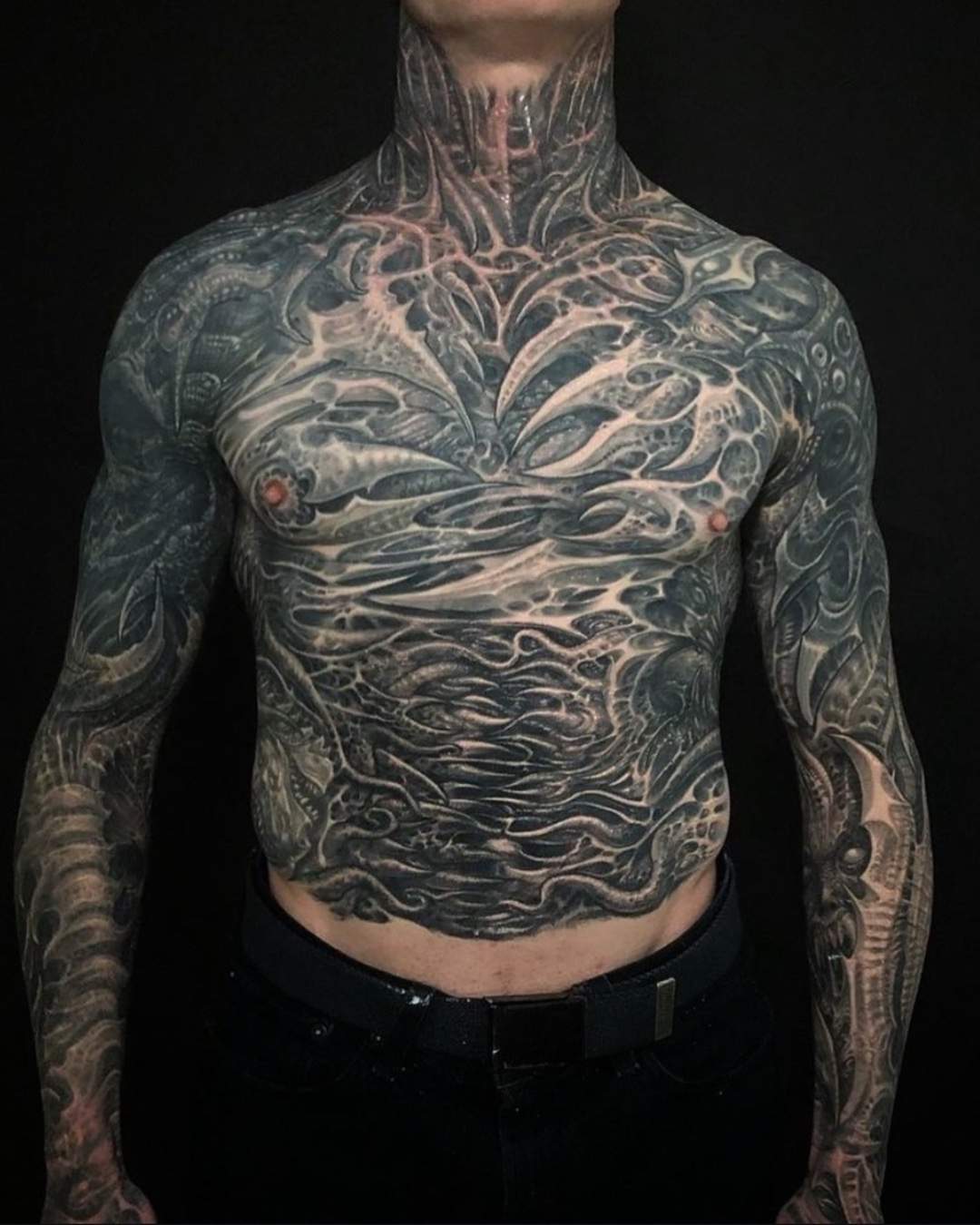
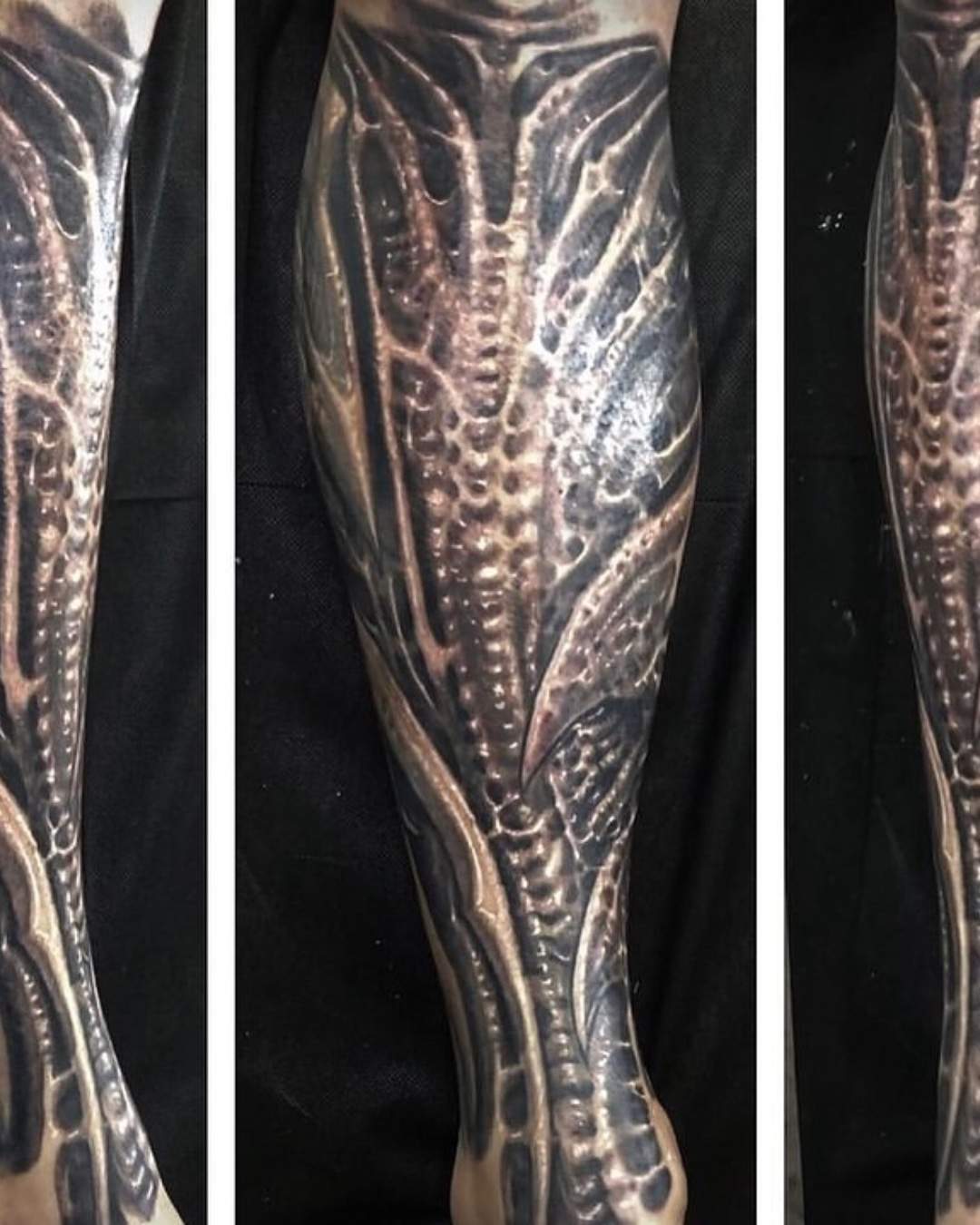
Bio-organic keeps Biomechanical's opened skin and swaps steel for flesh: muscle, sinew, cartilage and articulated bone.
On YokoFolio, pick the style Bio-organic and then your city, and widen the radius: portfolios that really show it are rare. The decisive test is the drawing on the skin — the anchors and the tension have to land on your own contours, not on a model's. Look at photos taken in motion, arm bent and extended, and at healed work where the textures still hold their depth. Check that the edge of the opening reads as real skin and that the tissue underneath has volume, not just surface texture. When you contact the artist from their profile, ask whether they draw freehand on the body, and ask to see finished healed pieces rather than fresh close-ups.
Rarely from a finished drawing. You don't show up with an image to reproduce: you bring an area of the body, a mood, sometimes a reference, and the artist composes directly on the skin, often freehand with markers, so the openings and anchor points land on your own muscles and bones. The main lines are decided on you, then refined from one session to the next. That takes some letting go, and it's better to accept it going in. If you have a strong preference — more bone, more membrane, a touch of red — show examples at the first appointment. And since the word itself is used loosely, pictures of what you like will say more than the label.
It's its best format, for a specific reason: the composition has no frame. It can extend over the years, from forearm to shoulder and then on to the shoulder blade or the chest, with no initial decision boxing it in. What you want to look at is the join between two sessions: an opening that picks up where the last one stopped has to look like one continuous piece. So ask to see finished sleeves, not just forearms — that's where the join gets judged. Count on a series of appointments, the first one largely spent drawing on the skin. A leg or a back works on the same principle, as long as you leave the composition room to grow.
Bio-organic keeps the construction of Biomechanical — an opened skin, anchors, tension, depth — and changes only the material. Biomechanical shows metal: pistons, plates, screws, cables. Bio-organic shows living matter: fibers, cartilage, membranes, sinew, bone. Gears, pistons or metal plates make a piece Biomechanical; plenty of artists mix the two, a mechanical section running on into flesh, so if that's what you want, look at both styles. If you see flesh, sinew or bone held in tension under an opened skin, with no metal anywhere, it's Bio-organic.