1/6

4 tattoo artists · 1 tattoo studio
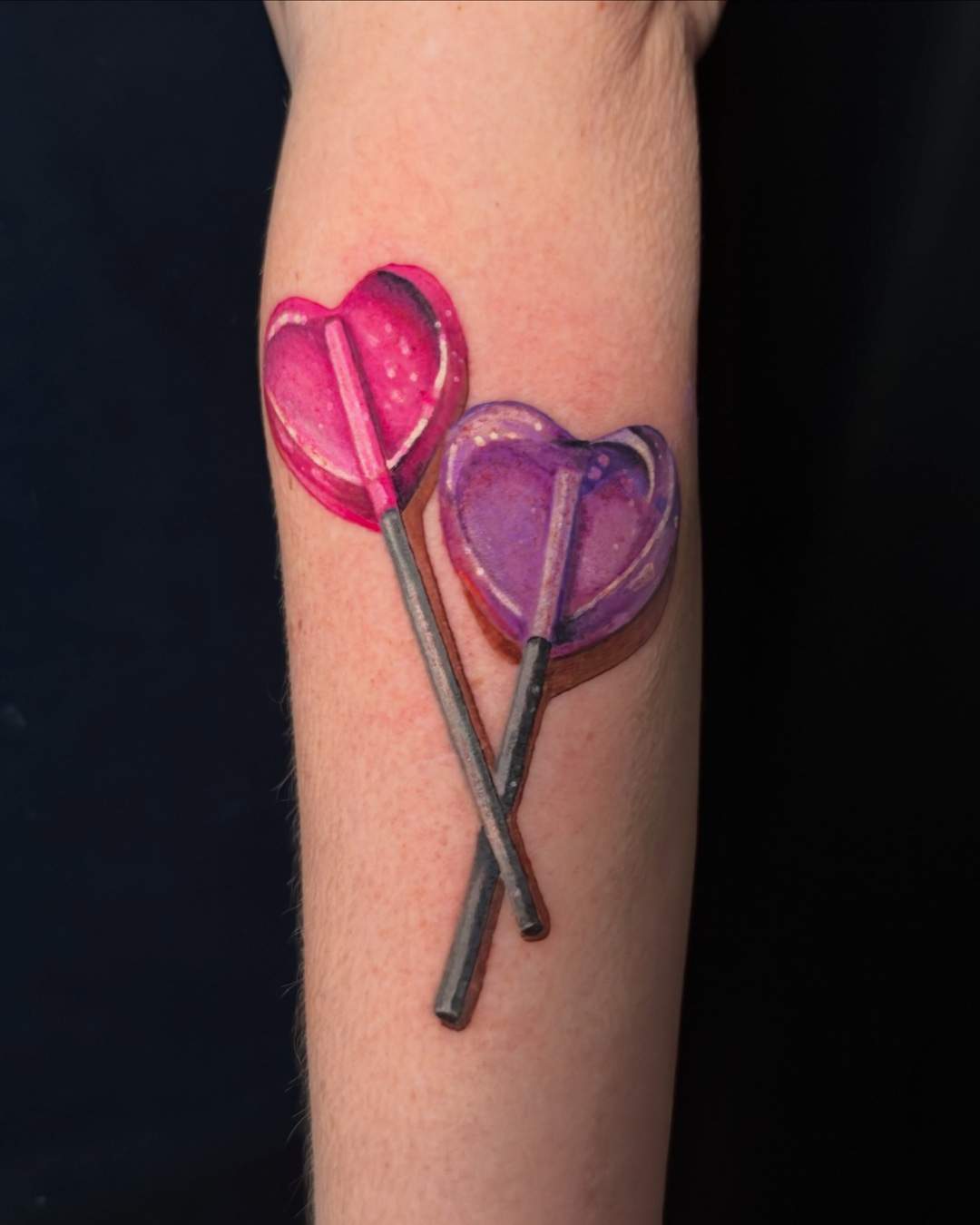
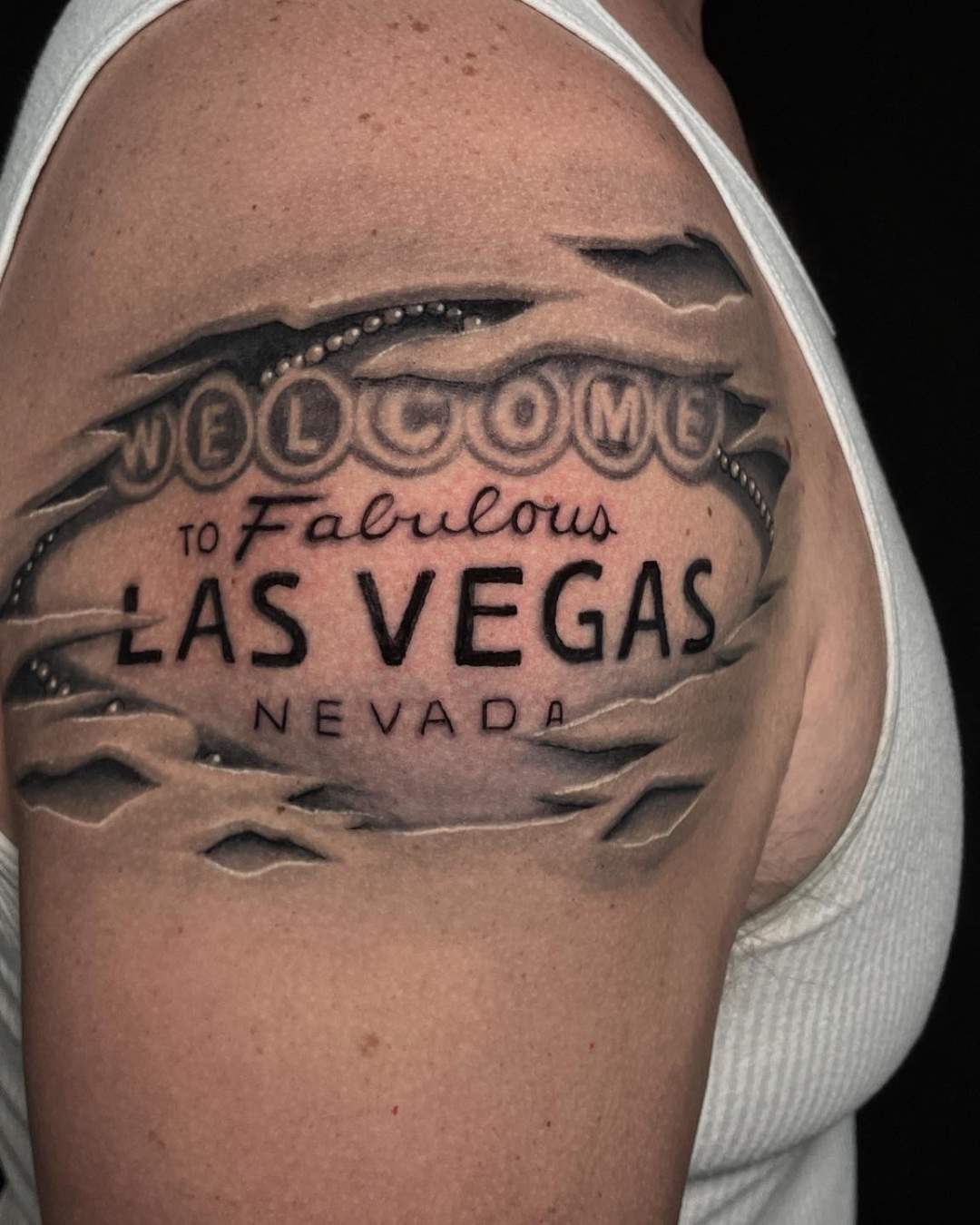
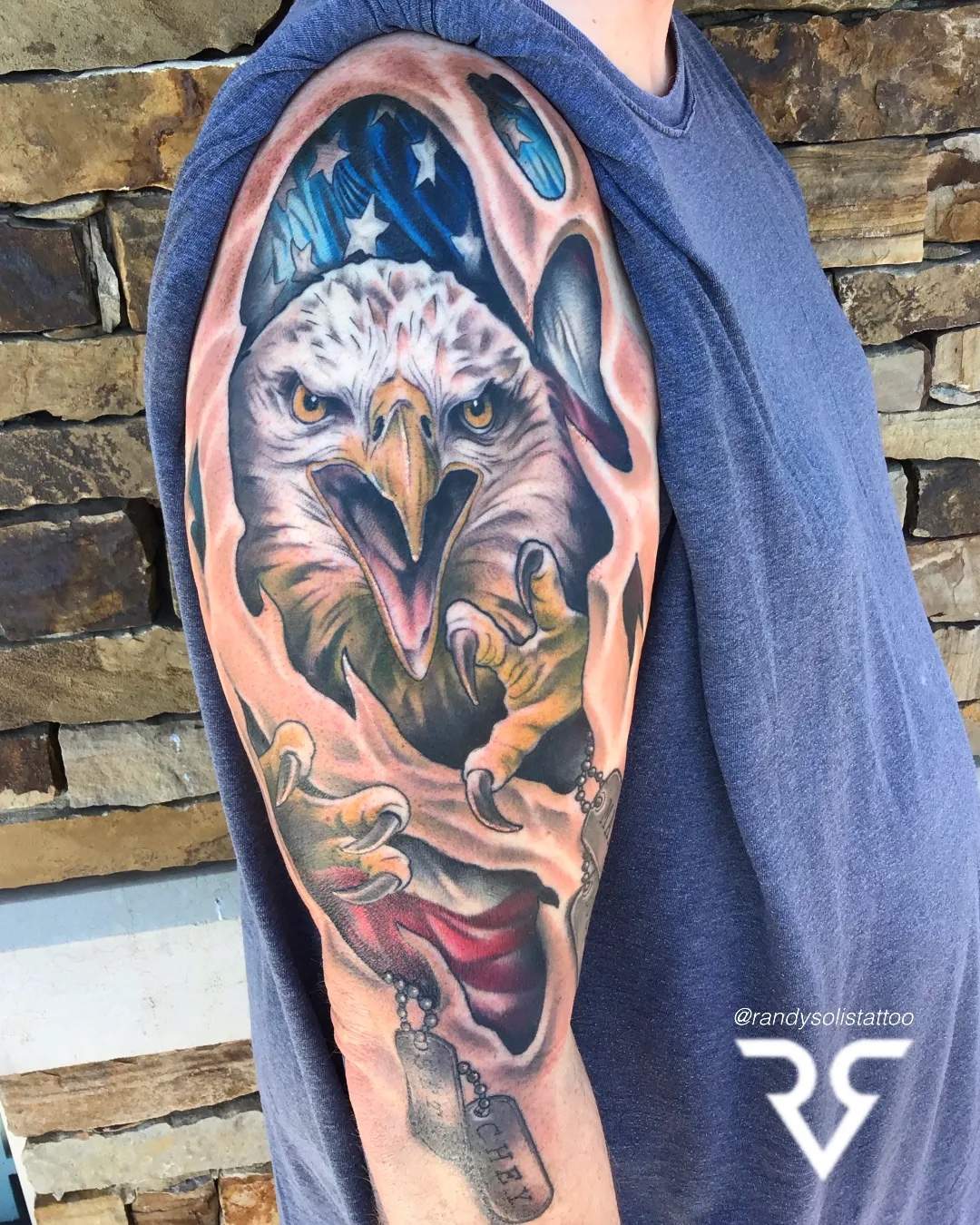
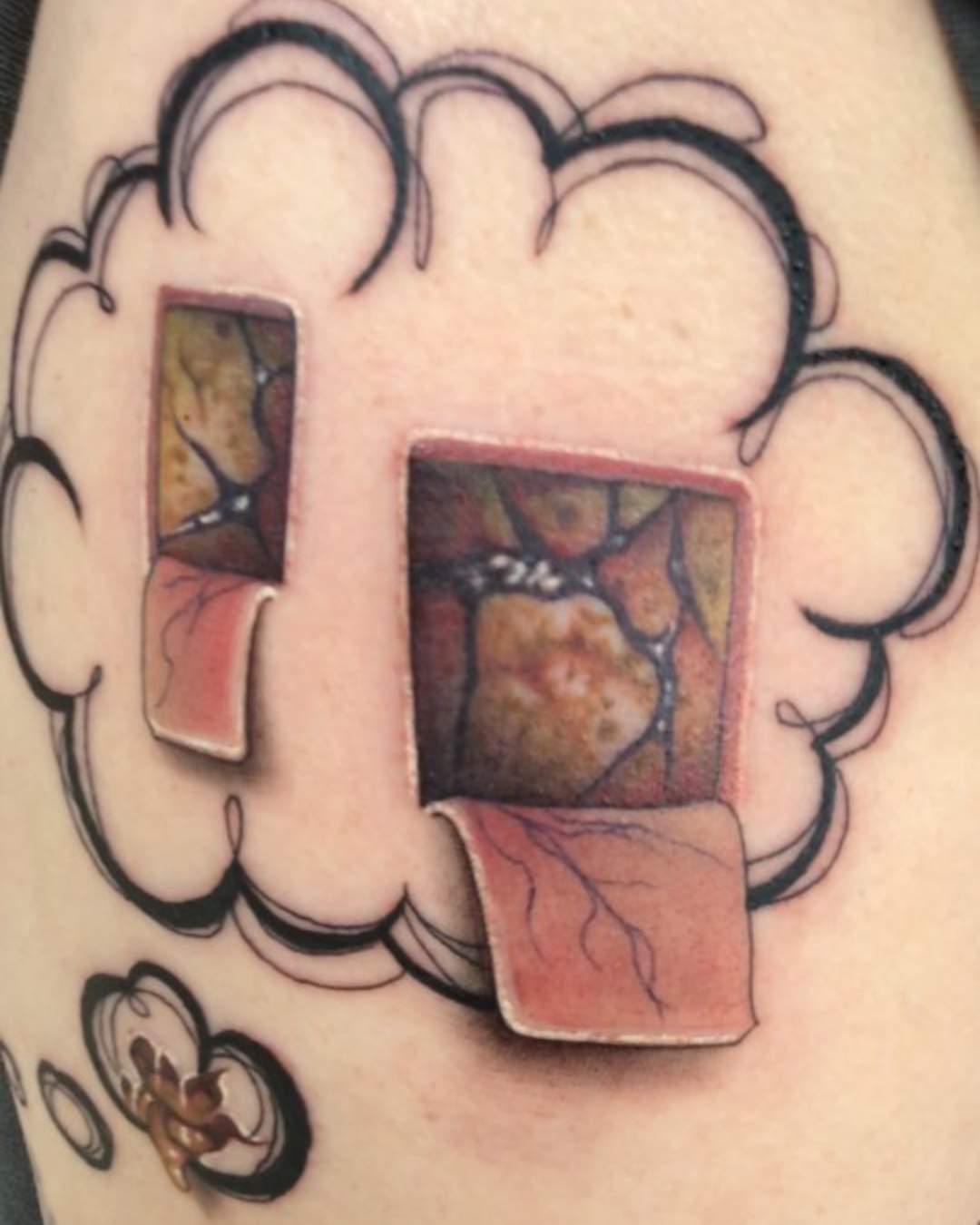
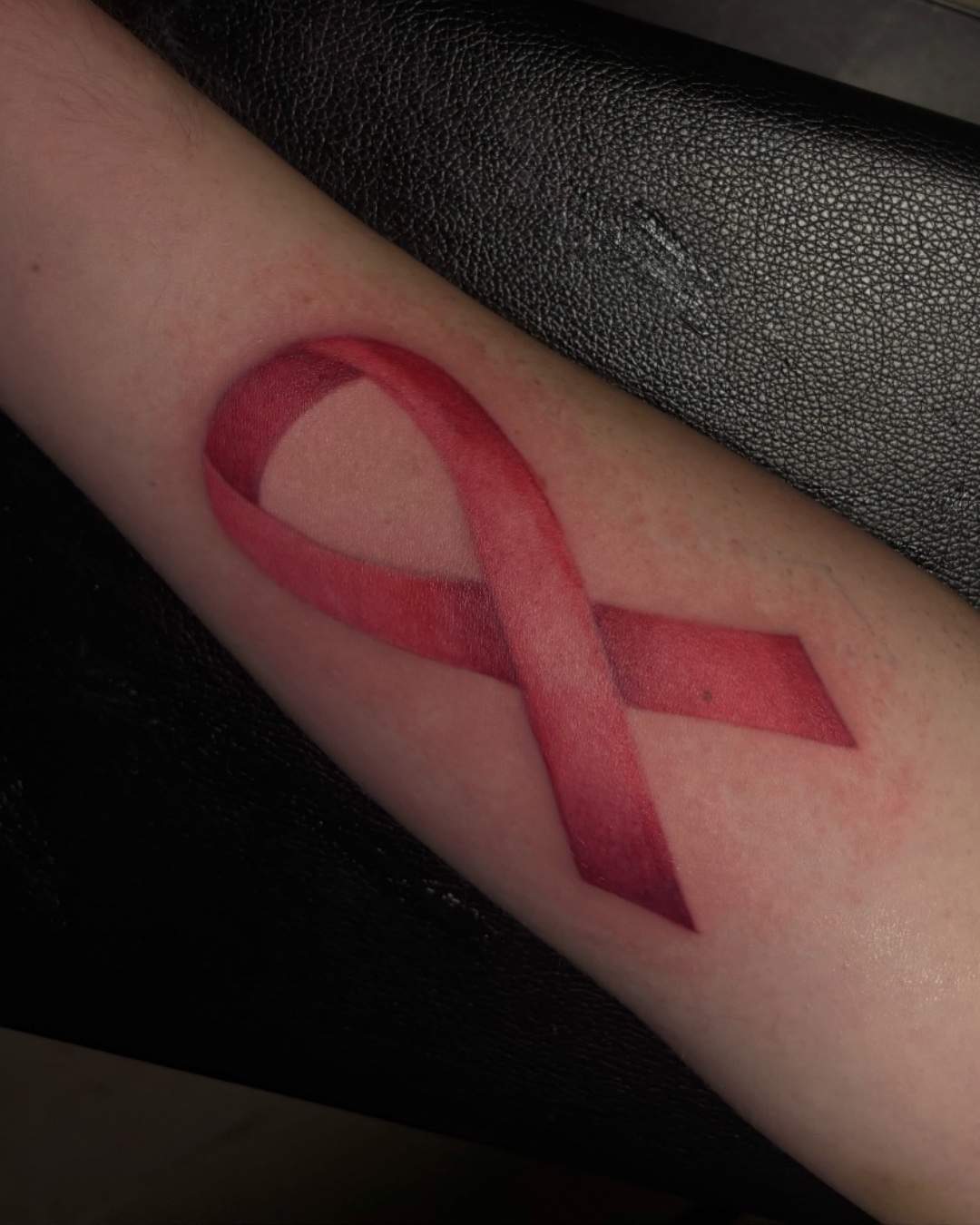
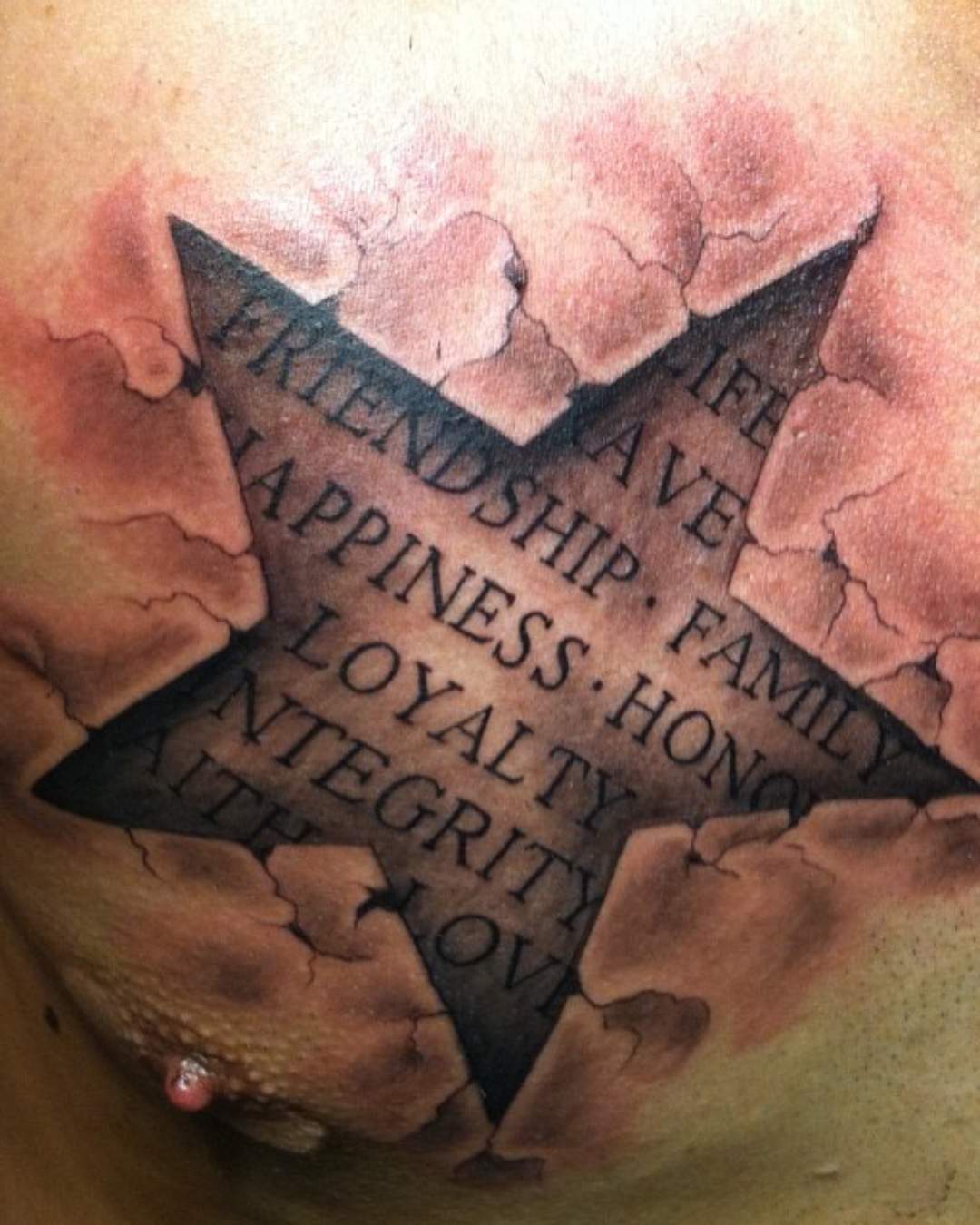
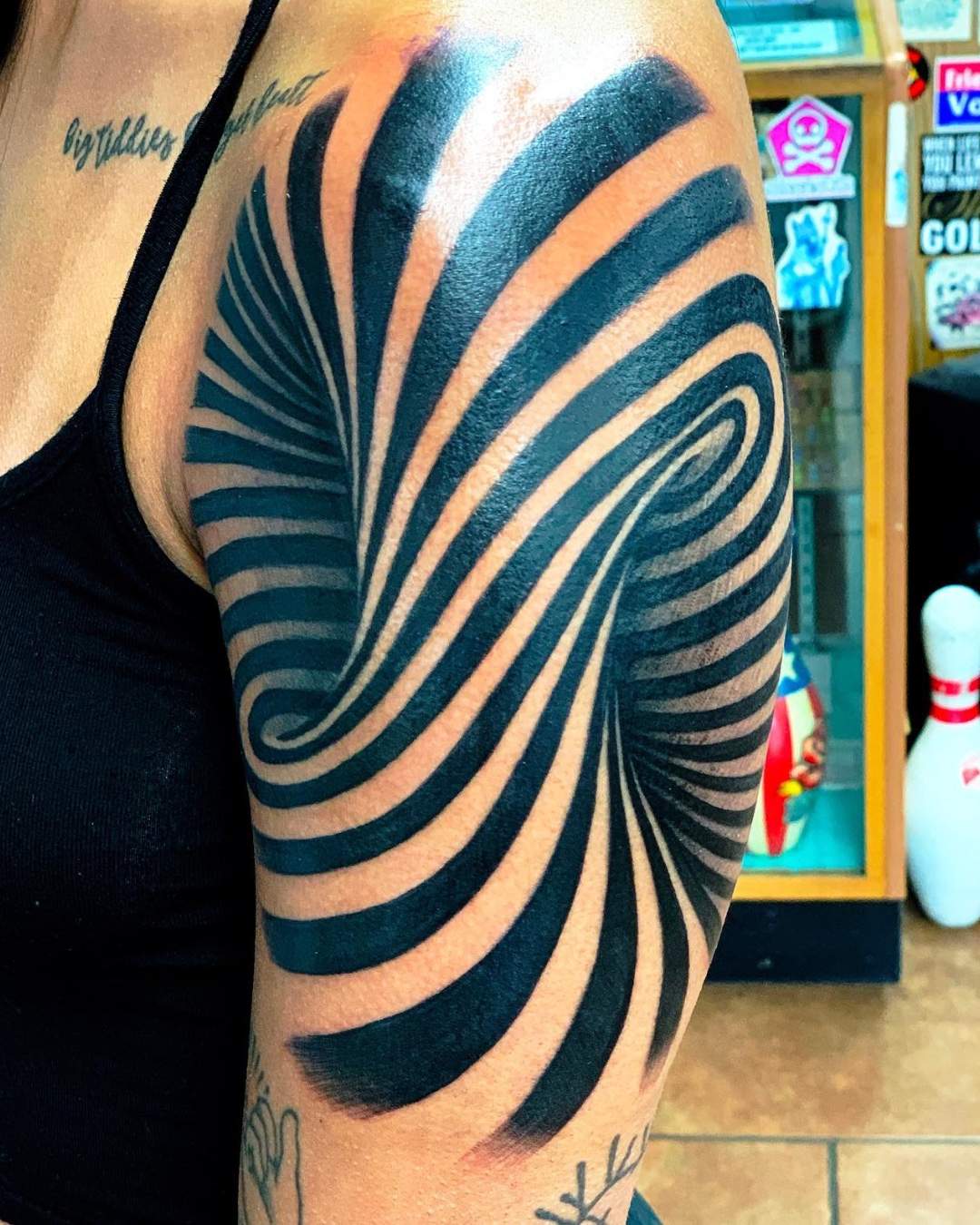
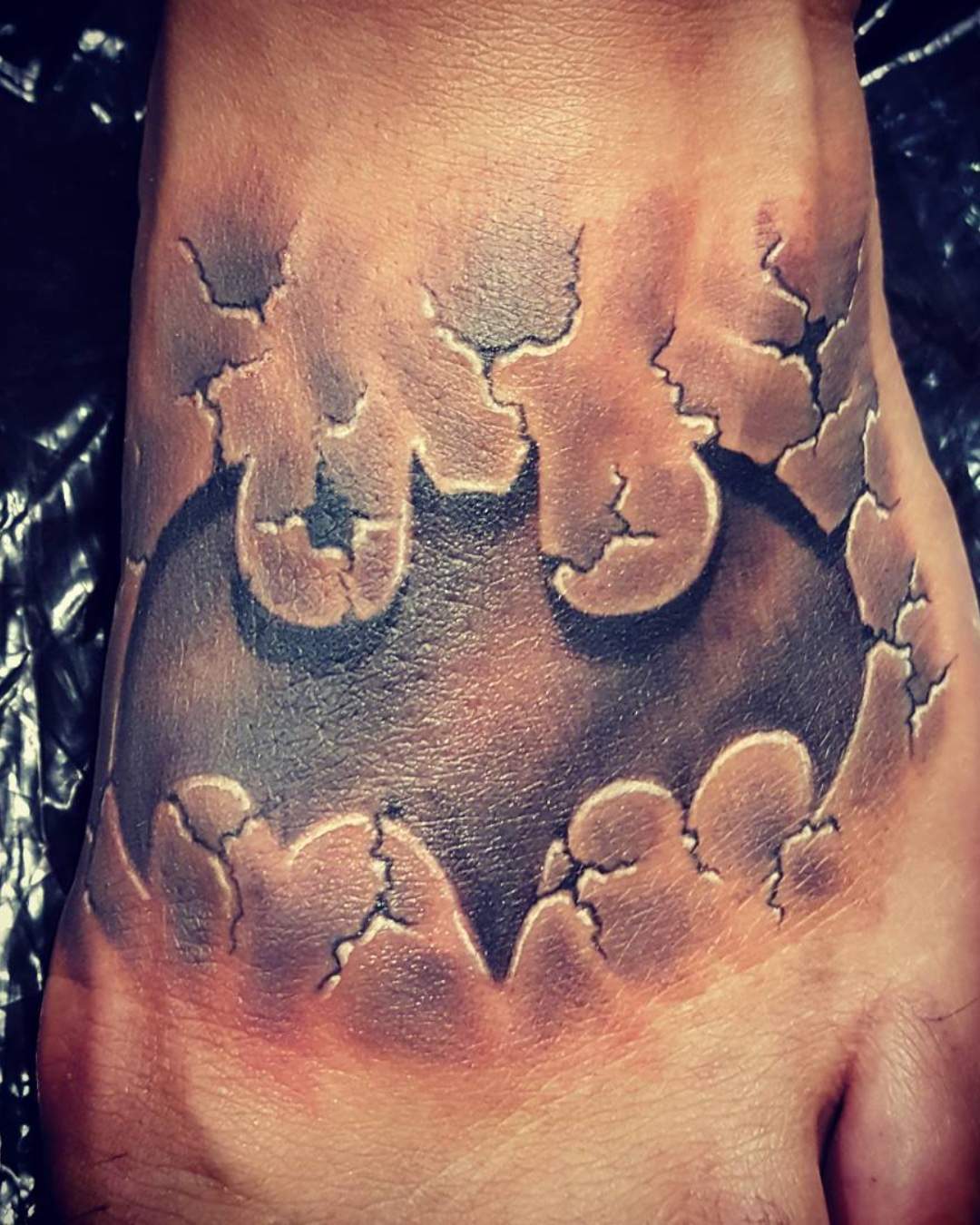
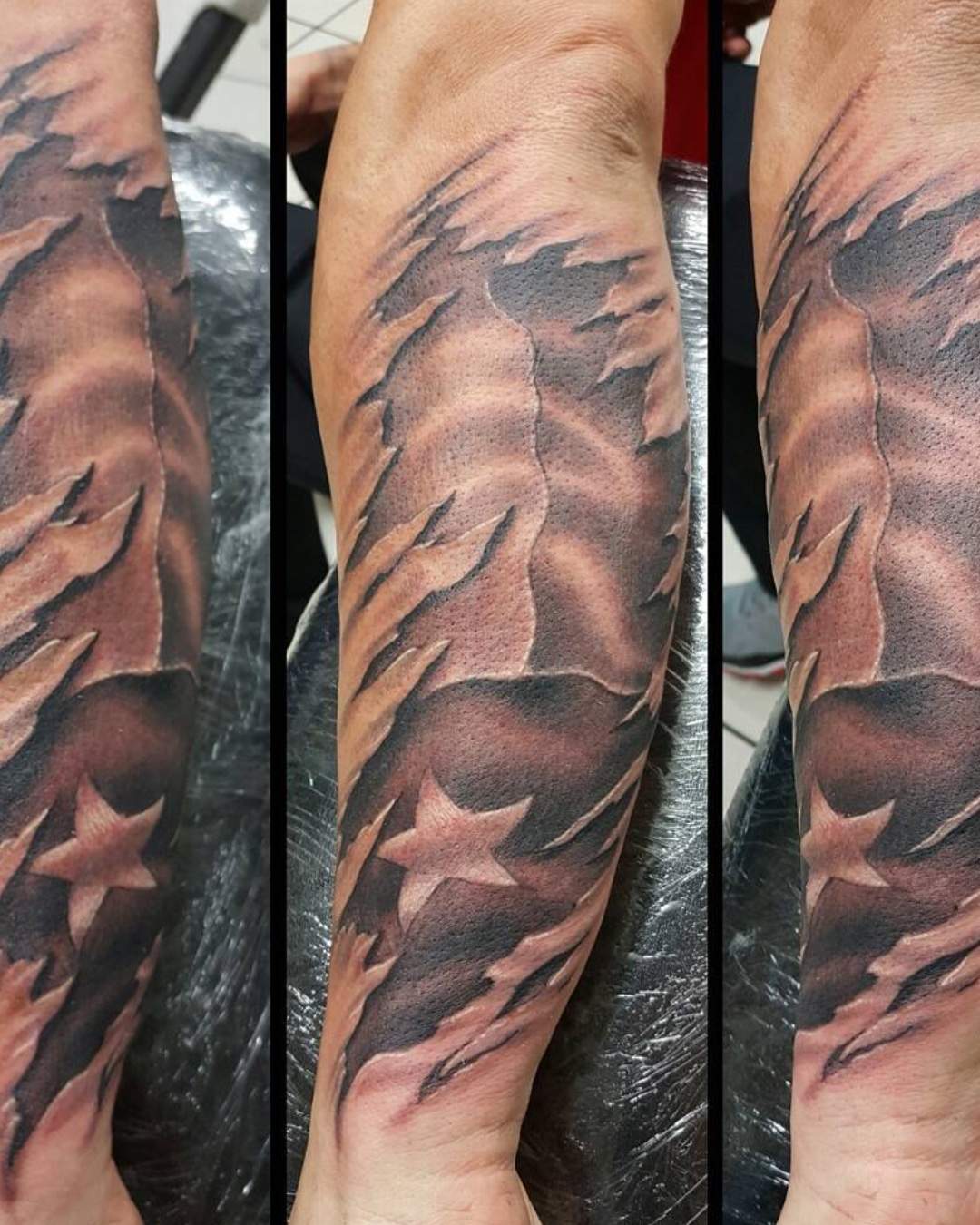
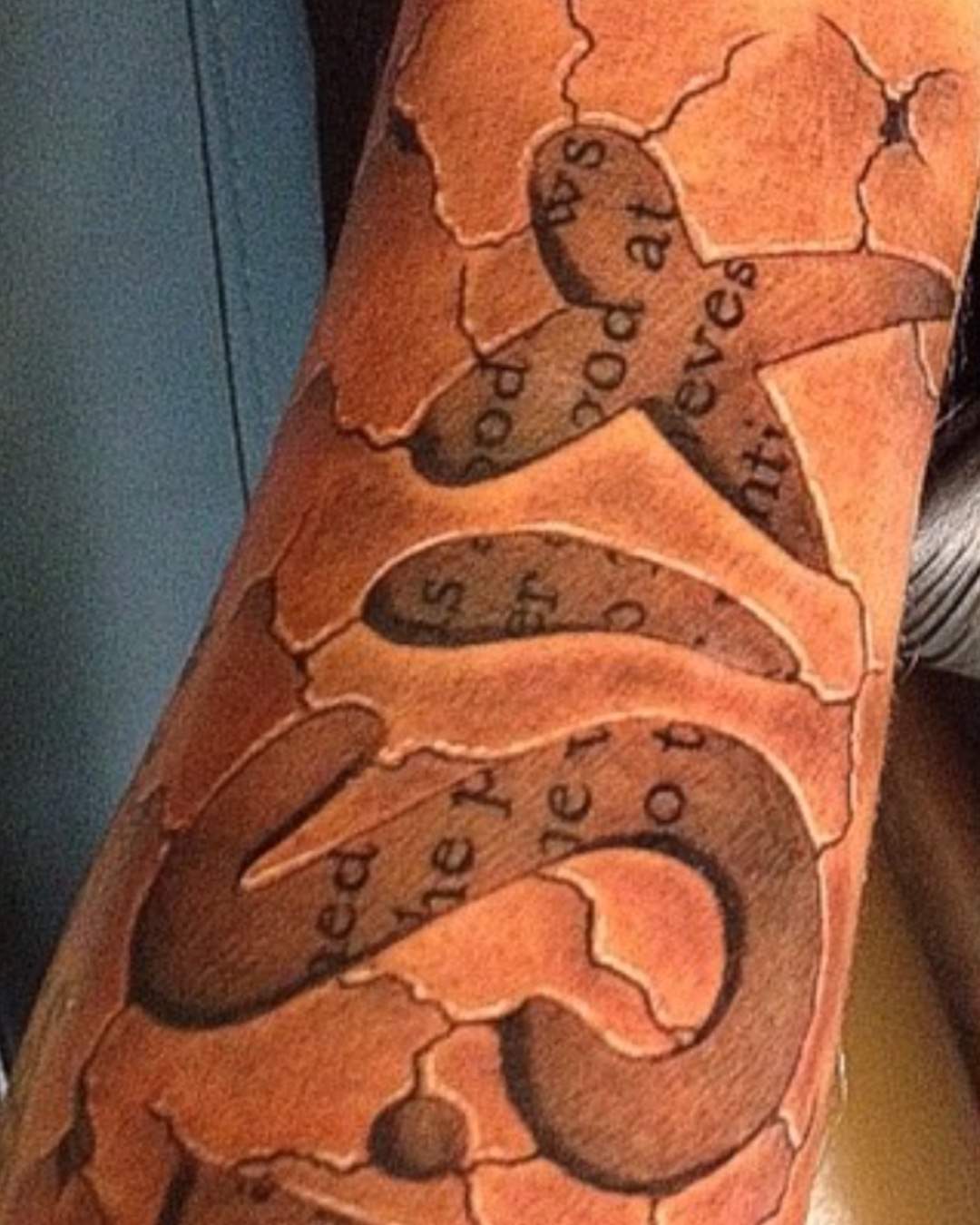
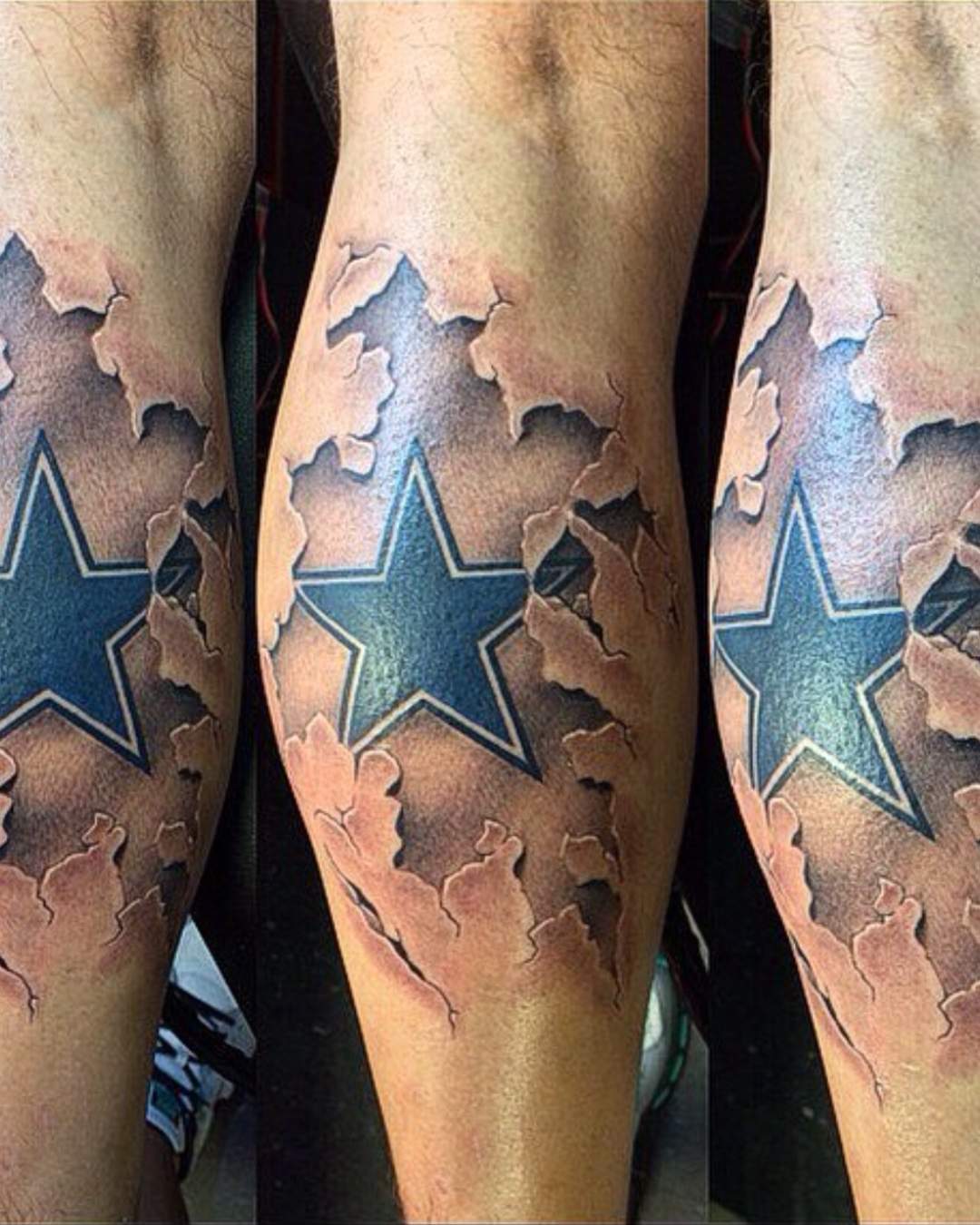
3D realism tattoos fool the eye: with shading and cast shadows, the skin seems torn, folded, zipped open or carrying a real object.
On YokoFolio, pick the style 3D Realism and then your city, and widen the radius if needed. Look for consistent light: every shadow in a piece should fall in the same direction, or the illusion breaks. The edges where the effect meets the skin — a tear, a fold, a hole — should be convincing up close. Ask for photos and videos of healed work from several angles.
Not completely, and no 3D illusion does. It's designed for a main point of view, usually the one people see most often, and it stays strong within a range around it. A good artist chooses the placement and the direction of the light to match how that part of the body is usually seen and how it moves. Curved areas like the forearm, the calf or the shoulder carry the effect well.
Torn or peeled-back skin revealing something underneath, a zipper opening on the arm, a hole through the hand, stitched skin, a sticker or a piece of tape that seems to lift off, a drawing on paper that curls, a coin or a key resting on the skin. The best ideas play with the body itself. Keep the concept simple: the illusion is the star, and a busy design weakens it.
Biomechanical uses the torn-skin effect to reveal machinery — gears, pistons, cables — as if the body were part machine. 3D realism is broader: the illusion itself is the subject, and it doesn't need a tear at all — a zipper, a fold, a hole, an object resting on the skin. If you see metal and machinery under the skin, it's Biomechanical.